On this page
- 01Skydiving in the Philippines, in 45 Seconds
- 02Why the Philippines Is One of Asia's Most Underrated Skydiving Destinations
- 03Philippines Skydiving Overview: Where, When, and How
- 04The Active Dropzones, Compared
- 05Which Philippines Dropzone Is Right for You?
- 06What It's Actually Like to Do a Tandem Skydive in the Philippines
- 07Is Skydiving in the Philippines Safe?
- 08How Much Does Skydiving in the Philippines Cost?
- 09Best Time of Year to Skydive in the Philippines
- 10Philippines vs Thailand vs Bali for Skydiving
- 11Frequently Asked Questions
- 12Why You'll Want to Do This Once
Quick answer: three commercial skydiving dropzones in the Philippines are taking bookings in 2026 — Skydive Cebu (Bantayan Island), Skydive Siquijor, and Skydive Palawan (San Vicente, seasonal January–May). All are USPA-affiliated and run tandem jumps from 10,000 ft. Bantayan offers the country's only beach landing; Siquijor is the slow-travel pick; Palawan is the limestone-coast jump, but only in the dry season. Skydive Zambales (Iba, Luzon) — long the cheapest and the only Manila-accessible site — is currently paused and not accepting bookings. 2026 operator-verified tandem prices: Cebu ₱28,350 ≈ $452 (standard) – ₱41,475 ≈ $661 (premium with outside camera); Siquijor ₱27,850 ≈ $444 – ₱40,950 ≈ $652; Palawan ₱27,825 ≈ $443 – ₱51,975.
Skydiving in the Philippines, in 45 Seconds
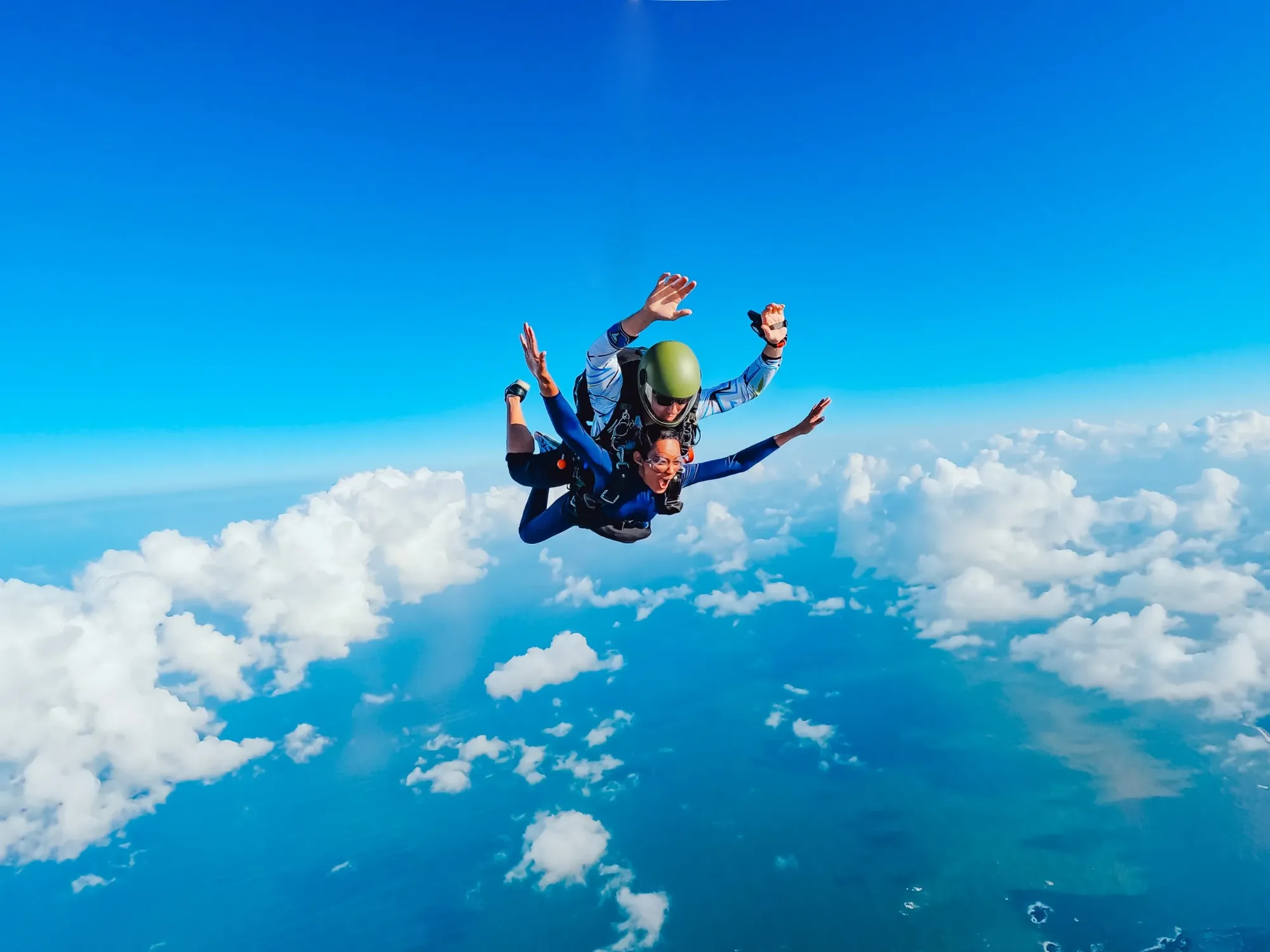
There is a moment, somewhere over the Visayan Sea, when the door of a small Cessna slides open and the world below stops looking like a country and starts looking like a map. Coral shelves bloom turquoise around the edges of long, thin islands. Reefs trace the coastline in silver scribbles. White-sand spits curl into the water the way a comma curls inside a sentence. And then your tandem instructor taps your shoulder, you tip forward, and for the next forty-five seconds the Philippines does what almost no other skydiving destination on earth can do — it falls toward you.
This is the guide we wish existed when we first started mapping the active dropzones of the Philippines. It is built for first-time skydivers wondering whether a tandem here is worth the flight, for divers and island-hoppers who want to add a single, life-defining hour to a Cebu, Siquijor, or Boracay itinerary, and for experienced jumpers tired of seeing the Philippines treated as a footnote to Thailand and Bali. It is also, frankly, a corrective. The Philippines is one of Asia's most underrated skydiving destinations — not because nobody has noticed, but because nobody has yet bothered to sit down and tell the full story.
So we have. Below, you'll find every active dropzone in the Philippines compared head-to-head: where they fly, what you'll see, how much it costs, who each one is best for, and what the experience actually feels like — minute by minute — from the moment you walk into the manifest office to the instant your feet touch the ground again.
If you read only one Philippines skydiving guide this year, make it this one.
Why the Philippines Is One of Asia's Most Underrated Skydiving Destinations
There is a reason most travel writers default to Thailand or Interlaken or Bali when they talk about skydiving in this part of the world. Those destinations are easier to describe. The drop zone is the headline. The mountains are the backdrop. There is a single iconic frame and the rest of the article writes itself.
The Philippines refuses to be that simple.
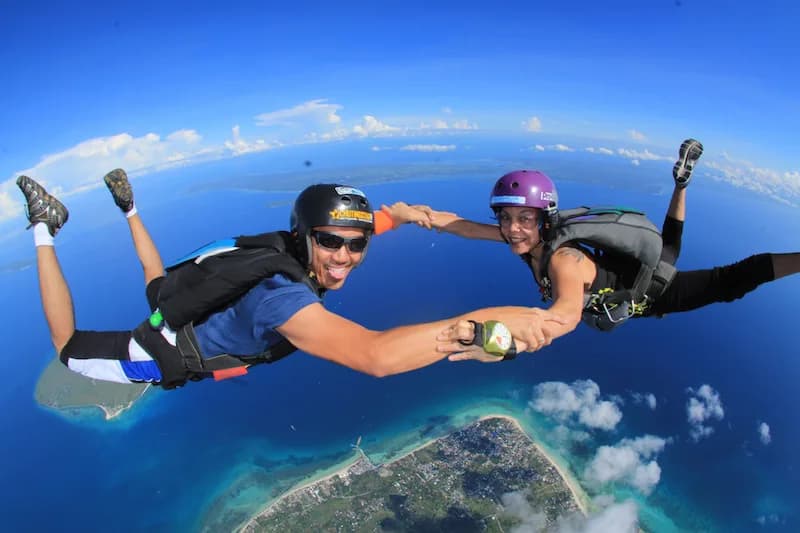
This is an archipelago of more than 7,600 islands stretched across a tropical waist of the Pacific, and skydiving here doesn't mean one signature view — it means several, depending on which island you choose. From a Cessna at 10,000 feet over Bantayan, you see white-sand beach so bright it looks artificial against the darker turquoise of the reef shelf. From the same altitude over Siquijor, you see a small mystic island wreathed in coral, with the larger silhouettes of Negros and Cebu at the edges of the world. Over Iba, in Zambales, the geography flips entirely — the South China Sea on one side, the Zambales mountain range on the other, and a strip of Luzon coastline running between them like a seam.
What ties these experiences together is the quiet thing the Philippines has that most of Asia's skydiving scene lacks: federation-grade rigor combined with genuine tropical scenery. Every active dropzone in this guide operates under USPA (United States Parachute Association) affiliation, which means equipment standards, instructor ratings, gear inspections, and reserve canopy protocols are anchored to one of the most respected jump federations in the world.
That matters for first-time jumpers in a way that brochures rarely explain well. Skydiving safety isn't a single thing — it's a stack of small, boring decisions made the same way, every day, by every operator. USPA membership is the closest thing the recreational skydiving world has to a quality stamp. The Philippines is one of the only countries in Southeast Asia where every active commercial dropzone carries it.
Add to that the cost. A standard tandem skydive in the Philippines lands between roughly ₱27,825 ≈ $443 and ₱28,350 ≈ $452 depending on the dropzone, with premium outside-camera packages reaching ₱40,950–41,475 ≈ $652–661 — meaningfully less than equivalents in Australia, Europe, or North America, and competitive with Thailand. Add to that the tourism pairing: Cebu's diving and island-hopping, Siquijor's mystical-island culture and waterfalls, Palawan's El Nido lagoons and limestone coast. You are not flying to the Philippines to skydive. You are skydiving while you are in the Philippines for everything else, and that changes the math entirely.
The Philippines is underrated for one boring reason: nobody has written this article. The country deserves it.
Philippines Skydiving Overview: Where, When, and How
The commercial skydiving operations currently taking bookings in the Philippines cluster around two regions: the Visayas (Bantayan Island in Cebu, and Siquijor) and Palawan (San Vicente, on the western coastline, January through May). Luzon's Skydive Zambales at Iba — for years the country's most accessible and most affordable dropzone — is paused as of August 2026. Each region has a distinct character, a distinct flying season, and a distinct ideal traveler.
One further operation exists — a long-running USPA team based in Davao Oriental (Mati City) — which we'll touch on later for completeness. We track dropzone status continuously rather than annually, so where an operator has stopped flying we say so plainly and leave the reporting in place. That is the point of this guide: an accurate roster beats a long one.
Here's the lay of the land at a glance.
| Dropzone | Region / Island | Closest hub | Altitude | Tandem price |
|---|---|---|---|---|
| Skydive Cebu | Bantayan Island, Cebu | Cebu (CEB) + ferry | 10,000 ft | ₱28,350 ≈ $452 (standard) / ₱41,475 ≈ $661 (premium) |
| Skydive Siquijor | Siquijor (Visayas) | Dumaguete (DGT) + ferry | 10,000 ft | ₱27,850 ≈ $444 (standard) / ₱40,950 ≈ $652 (premium) |
| Skydive Palawan | San Vicente, Palawan (Jan–May) | Puerto Princesa (PPS) or San Vicente (SWL) | 10,000 ft | ₱27,825 ≈ $443 (single) / ₱44,100 ≈ $702 (camera flyer) |
| Skydive Zambales | Iba, Zambales (Luzon) | Manila (MNL), ~4 hr drive | — | Paused — not taking bookings |
If you're traveling on a Visayas itinerary — flying into Cebu, hopping to Bohol, swinging through Siquijor — Skydive Cebu and Skydive Siquijor are essentially in your path. They are also operated by the same USPA-affiliated team, so the standards and aircraft you'll encounter are consistent across both locations. If you're staying north and Manila is your base, there is no longer a drive-to option: Skydive Zambales, which held that role for years, is paused, so a domestic flight south is the only route to a jump.
The honest answer to “where should I skydive in the Philippines?” is: it depends on which island you're already on. None of the three are a destination unto themselves. All three are extraordinary when paired with the rest of what each region offers — and that pairing is genuinely the right way to think about Philippines skydiving.
The Active Dropzones, Compared
What follows is the deepest comparison of Philippine dropzones we've seen written. We've tried to keep operational claims responsible and verifiable — no invented statistics, no copy-pasted brochure language. What you read here is what a thoughtful, well-traveled jumper would tell a friend over a beer.
1. Skydive Cebu — Bantayan Island, Cebu
Where: Santa Fe, Bantayan Island, in the northern Cebu municipalities. The dropzone is reached by a ferry crossing from Hagnaya port (about a 3-hour drive from Cebu City), with the ferry itself running roughly hourly during daylight.
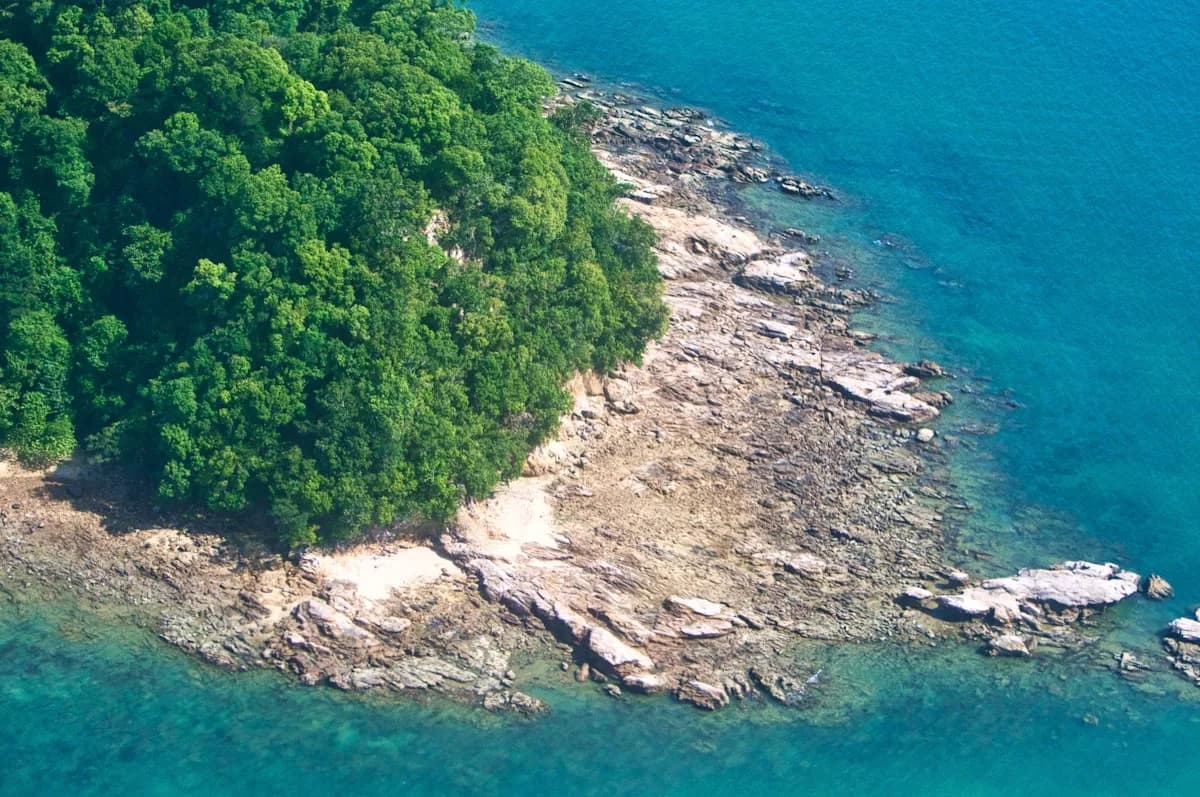
The scenery: of the Philippine dropzones currently flying, this is the one most travelers come for. Bantayan is one of the most photographed islands in the Visayas — long, low, ringed almost entirely by white-sand beach and a shallow reef shelf that fades from pale aquamarine in the shallows to deep navy where the deeper water begins. From altitude, the entire island reads almost like an illustration. The freefall happens over open water and the canopy ride brings you back over beach.
Why it's unique: Skydive Cebu is the Philippines' only USPA member dropzone with a beach landing. That sentence is a much bigger deal than it sounds. Beach landings require an order of magnitude more weather discipline than land landings — winds shift, sand topography changes, the visual cues are different. They are also, for a tandem student, one of the most cinematic possible ways to come back to earth. You spiral down with the reef directly below your feet, the canopy banks hard over the shallows, and your instructor sets you down on a surface that is, generously, the closest thing skydiving has to landing on a postcard.
Atmosphere: Bantayan as a destination is laid-back island life — a place where dogs sleep in the middle of the road and dinners are mostly grilled fish. The dropzone fits the island. Expect a smaller, family-feel manifest office, a relatively short brief, and an instructor team that has clearly done this exact jump several thousand times.
Best for: first-time jumpers who want the most photogenic possible Philippine skydive; couples adding a once-in-a-trip experience to a Cebu honeymoon; divers on a Bantayan and Malapascua thresher-shark itinerary who want a counterpoint to all the underwater hours.
Beginner friendliness is high. The brief is conducted before flight in clear English. Tandems are operated from 10,000 feet, which delivers 30–40 seconds of freefall (per the operator's published specs) followed by 5–7 minutes under canopy — long enough to feel everything, short enough that pre-jump nerves don't have time to build to crisis levels.
Pros worth highlighting:
- Most cinematic landing in the Philippines.
- USPA affiliation.
- Year-round operation.
- Easy to combine with Cebu and Bantayan diving and island-hopping.
Drawbacks to know:
- Reaching Bantayan from Cebu City requires a 3-hour drive plus a ferry — plan a full transfer day.
- Weather over island reefs is more fickle than over inland flats; a rebook day in your itinerary is wise.
2026 pricing (operator-verified 3 August 2026): Standard ₱28,350 ≈ $452/pax (handcam photos and edited video included); Premium ₱41,475 ≈ $661/pax (adds an outside-camera flyer for third-person photos and video); Group Jump ₱25,200 ≈ $401/pax with a minimum of 2 pax sharing one flight. Every tier includes a 20-minute sightseeing flight to altitude, the tandem jump itself (up to 10,000 ft, 30–40 second freefall, 5–7 minute canopy), a skydiving certificate, handcam photos and videos, and an edited reel ready for social.
Ideal traveler: the reader who has been to Cebu before, or is going for the first time, and wants the single most Filipino skydive on offer. If your bucket-list version of “skydive in the Philippines” looks like a postcard, this is the dropzone you've been imagining.
2. Skydive Siquijor — Siquijor Island
Where: Siquijor Airport, on the small mystic-coded island of Siquijor in the central Visayas. Reached by ferry from Dumaguete (Negros Oriental) or by a longer ferry/RoRo route from Cebu. Siquijor itself is roughly the size of Manhattan — small enough to circumnavigate by scooter in a day, dense enough to surprise you on every coast.
The scenery: Siquijor's coastline is reef-fringed, palm-shaded, and oddly intimate. Where Bantayan is a long flat island in a wide sea, Siquijor is a near-circular island that you can take in almost completely from a single tandem altitude. From 10,000 feet you can see the shores from horizon to horizon, the silhouette of Apo Island and Negros to the west, and the deeper blue of the Bohol Sea wrapping the eastern coast. The island has a distinctive limestone and coral-shelf topography that gives the canopy ride a subtly different visual character to Bantayan — less brilliant white sand, more layered greens and blues.
Why it's unique: this is the same USPA-affiliated operating team behind Skydive Cebu, running a second site so that travelers on the Negros–Bohol–Siquijor circuit can jump without backtracking to Cebu. That's a quietly important detail. It means the safety culture, the gear discipline, the instructor ratings, and the airworthiness standards are the same as Cebu's — not a separate, lower-resource operation under the same name. For travelers, it also means Siquijor's manifest is built explicitly around the small-island traveler. Expect easy logistics, English-language briefs, and timing that respects ferry schedules.
Atmosphere: Siquijor has a reputation in Philippine domestic travel as the country's mystic or witchy island — folk healers, century-old balete trees, mountain springs. The island runs at about half the speed of Cebu City. The dropzone matches that pace — small team, calm energy, no pressure.
Best for: couples on a Visayas honeymoon; photographers; travelers who already know they want a smaller, slower, more atmospheric skydive than Bantayan; anyone whose itinerary already includes Siquijor.
Beginner friendliness is high, with the same caveats as Cebu — clear briefing, 10,000-foot tandem, 30–40 seconds of freefall, 5–7 minutes under canopy.
Pros worth highlighting:
- Year-round operation.
- Same USPA-affiliated standards as Skydive Cebu.
- Fits naturally into the Negros–Bohol–Siquijor traveler loop.
- Quieter, more intimate experience.
Drawbacks to know:
- Slightly more expensive than the Cebu site.
- Reaching Siquijor at all requires a ferry from Dumaguete or Cebu — not a fly-in-same-day jump for most international travelers.
2026 pricing (operator-verified 3 August 2026): Standard ₱27,850 ≈ $444/pax (handcam photos and edited video included); Premium ₱40,950 ≈ $652/pax (outside camera flyer); Group Jump ₱24,650 ≈ $393/pax (minimum 2 pax). Marginally cheaper than Cebu across the board, despite the smaller-volume operation, with the same package structure.
Ideal traveler: the reader on a Visayas slow-travel itinerary who wants a skydive that matches the island's pace. If Bantayan is the postcard, Siquijor is the pressed-flower journal page.
3. Skydive Zambales — Iba, Luzon (paused as of August 2026)
Where: Iba Airport, in the province of Zambales, on the west coast of Luzon. A drive of roughly four hours from Manila — long enough to feel like a real road trip, short enough to do as a long day or, more comfortably, an overnight.
The scenery: Zambales doesn't look like Cebu and it doesn't look like Siquijor. The province is mainland Luzon coastline — the South China Sea on one side, the inland bulk of the Zambales mountain range on the other. From a Cessna at 10,000 feet over Iba, you see two completely different landscapes in the same frame: ocean to the west, mountains to the east, and a strip of Filipino coastal town life running between them. It is a different kind of beautiful from the island sites — less reef-shelf turquoise, more coastal geography and big-country views.
Why it was unique: Skydive Zambales was the most accessible dropzone in the country for travelers based out of Manila, and the only one in this guide running both tandem and a static-line programme — meaning if you had ever entertained training as a solo jumper rather than just doing a tandem, this was where you started in the Philippines. Tandem prices here were also the lowest in the country, which made Zambales a natural fit for first-timers and budget-conscious travelers. With the site paused, the Philippines currently has no walk-in static-line pathway at all.
Atmosphere: less of a tourism dropzone, more of a working dropzone. The Iba site is a real airport with real local life around it; the manifest is run with quiet competence; the local jumper community uses it as a home base. As a tandem traveler you get the benefit of being in a working environment rather than a tourism setpiece — which some first-timers find more reassuring, not less.
Best for: travelers based in or transiting through Manila; surf-coast pairings (Zambales has San Felipe / San Antonio surf and Crystal Beach nearby); aspiring solo skydivers wanting to start static-line in the Philippines; budget-conscious first-timers.
Beginner friendliness is high. Tandem from 10,000 feet, English-language briefing, USPA-affiliated. The static-line program is for travelers who specifically want to begin a solo skydiving path — not a casual day-of upgrade.
Pros worth highlighting:
- Most accessible from Manila — no inter-island travel required.
- Most affordable tandem in the Philippines.
- Tandem and static-line both available.
- USPA affiliation.
- Easy to pair with Zambales surf and Mount Pinatubo treks.
Drawbacks to know:
- Scenery is Luzon coastline + mountains rather than tropical island reef — beautiful, but different from the bucket-list image most international travelers have.
- Manila to Iba is a 4-hour drive each way.
Status as of August 2026: Skydive Zambales is paused and not taking bookings. Historically it was the most affordable tandem in the country, booked through the operator's Facebook page rather than a public website, with tandems in the ~₱17,000–20,000 ≈ $271–319 range and a static-line programme alongside. We are leaving the description above in place because the site and the team may well return — but do not plan a trip around it, and treat any third-party listing that still shows it as bookable as out of date. If you are Manila-based and want to jump in 2026, an inter-island flight to Cebu, Siquijor or Palawan is currently the only route.
Who it suited: the reader on a Luzon-based itinerary, or with a tighter budget, or with a real interest in pursuing skydiving past the tandem. If Cebu is the postcard and Siquijor is the journal page, Zambales was the road trip. We'll update this section the moment it starts flying again.
Currently closed. Skydive Zambales is not taking bookings. Its listing is kept live so the status stays findable, and any prices shown are historic.
A note on Davao Oriental and the “fifth dropzone” question
If you've been researching Philippine skydiving on other sites, you may have seen mentions of operations in Palawan (San Vicente) and Davao Oriental (Mati City). Both are run by USPA-affiliated teams, but neither is positioned the same way as the three above.
Skydive Palawan runs as a seasonal programme, flying the dry months of January through May from San Vicente's airport on Palawan's western coastline. It is genuinely one of the most beautiful jumps in the country — Palawan's limestone-cliff coastline is unmatched — and with Zambales paused it is now one of the three dropzones taking Philippine bookings. Operator-verified 2026 pricing: ₱27,825 ≈ $443 tandem (single), ₱44,100 ≈ $702 with a camera flyer, ₱51,975 for the full island package, ₱55,650 ≈ $886 for the two-person Skybuddies package. The seasonal calendar is the catch: travellers planning trips between June and December will need Cebu or Siquijor instead.
Skydive Davao Oriental is a long-running USPA-certified team based in Mati City, on Mindanao's Pacific coast. The setting — Pujada Bay, the Mati cliffs — is extraordinary. But Davao Oriental is the most logistically remote of the country's dropzones, and travelers should expect more variable scheduling and less tourism infrastructure than the Visayas or Luzon sites.
We'll cover both in dedicated guides as their year-round operations and platform availability evolve. For travelers planning a 2026 trip, the three dropzones above are the ones with reliable, bookable, year-round operations.
Most first-timers arrive convinced they're going to be the one who panics, freezes at the door, or doesn't enjoy it. The data is overwhelmingly the other way. The vast majority describe it as one of the best things they've ever done — and many come back for a second jump within the same trip.
— SKYDIVE IN ASIA EDITORIAL TEAM
Which Philippines Dropzone Is Right for You?
There are several honest ways to choose. Here's how we'd think about it.
If you want the postcard skydive: Skydive Cebu, Bantayan Island. Beach landing, USPA standards, the most photogenic single tandem in the country. This is the one you've been imagining.
If you want the slow-travel, atmospheric skydive: Skydive Siquijor. Smaller, quieter, fits a Visayas slow-travel itinerary. Same operating team and standards as Cebu, different flavor.
If you're based in Manila or watching budget: this used to be an easy call — Skydive Zambales, the cheapest tandem in the country and the only one reachable without an inter-island flight. With Zambales paused, Manila-based travellers face a flight either way. Cebu and Siquijor fly year-round; Palawan is the cheapest of the three in the January–May window.
If you're a first-time skydiver: all three of the dropzones currently flying are first-timer-friendly. The marginal call comes down to scenery preference and itinerary fit. Cebu wins on visual drama; Siquijor wins on calm; Palawan wins on coastline, inside its January–May window.
If you're a couple: Siquijor and Cebu both work beautifully. Siquijor edges it for the slow, intimate, just-the-two-of-you trip. Cebu edges it for the once-in-a-lifetime cinematic-frame trip.
If you're a backpacker: Palawan in the dry season for the lowest verified price. Bantayan for the unforgettable splurge.
If you're an experienced jumper: all three operate at 10,000 feet with USPA-affiliated discipline. Note that the country's only static-line programme ran at Zambales, which is currently paused — so there is no walk-in student pathway in the Philippines right now. Cebu and Siquijor are the more travel-photogenic destinations.
If you only have one day: no Philippine dropzone is currently a single-day round trip from Manila — that was Zambales, and it is paused. Bantayan, Siquijor and Palawan all reward an overnight stay, and realistically want two nights.
If you only have one shot: Bantayan. If we had to pick a single Philippine skydive to give a friend who would only ever do this once, the answer is Skydive Cebu's beach landing.
What It's Actually Like to Do a Tandem Skydive in the Philippines
This is the section we wish someone had written for us before our first jump. Here's what actually happens, minute by minute.
You arrive — generally an hour before your scheduled slot. The manifest office is small and informal — a clipboard, a waiver, a friendly check-in — not the institutional check-in of a major airline. You'll hand over identification, sign waivers, and hand over a deposit if your booking model requires one.
You meet your tandem instructor. Every USPA-rated tandem instructor in the Philippines has been jumping for years and has hundreds — usually thousands — of jumps logged. They will introduce themselves, ask about your weight and any relevant medical history, and walk you through the brief. Pay attention to the brief. It is not long but it is important.
The brief itself: you'll be shown the body position you need to assume on exit (legs back, head up, arms across the chest), the canopy phase positioning (legs lifted, body relaxed), and the landing position (legs up, instructor lands first). You'll practice each on the ground. This will feel slightly silly. Do it anyway.
Gear up: you'll be fitted into a harness — this is the harness you'll be physically attached to your instructor with for the entire jump. They will check the gear three times. You will check it once. Then you walk to the aircraft.
The climb: most Philippine tandem operations use small Cessna-class aircraft for the climb to altitude. Expect a tighter cabin than you've ever flown in. The climb to 10,000 feet takes roughly 15 to 20 minutes. The door is often closed for the climb and opened only on the run-in to jump. This is the longest part of the experience and, for most first-timers, the most nervous.
Door opens — the single most disorienting moment of the experience. The cabin pressure shifts, the wind noise changes character entirely, and what was previously a window-view is now an open door. Your instructor will tighten your harness one more time. They will move you to the door. You will hook your legs under the aircraft and prepare to tip forward.
The exit: you don't jump. Your instructor rocks you out — three counts, then forward. For about a second and a half, your body has no idea what is happening. Then the wind catches you, the aircraft falls upward out of frame, and the freefall begins.
Freefall: roughly 45 seconds of falling at terminal velocity — about 200 km/h. People expect freefall to feel like a rollercoaster. It does not. It feels like floating on a column of air so dense you could lie on it. The wind noise is loud but oddly soothing. Your face will distort and you will be unable to do anything about it. This is the part of the jump nobody can describe to you in advance and everybody wishes someone had tried harder. It is gentle, it is intense, and it is over before your brain has finished cataloguing it.
Canopy deploys: sudden silence. Sudden softness. Where freefall is wind and noise, canopy flight is calm. Your instructor will let you steer the canopy briefly — left, right, gentle spiral. From here you'll have anywhere from three to six minutes under canopy depending on conditions. This is the part of the experience travelers consistently say they remember most clearly later. Take it in.
Landing: legs up. Trust the instructor. Whether it's the white sand of Bantayan or the inland strip at Iba, the landing itself is faster and softer than you're expecting. You'll feel a small two-step skid, the canopy will collapse behind you, and you will be on the ground.
Afterward: most jumpers describe the same thing — a strange combination of euphoria and stillness, like you've been given thirty extra seconds of a life you weren't expecting. Some people cry. Some people laugh. Some people sit quietly for ten minutes. There is no wrong response.
This is what it's actually like to skydive in the Philippines. It is one of the cleaner, calmer, more well-run versions of this experience available in Asia.
Is Skydiving in the Philippines Safe?
The honest, calm, intelligent answer: tandem skydiving is one of the most thoroughly engineered adventure activities a tourist can do, and Philippine commercial operations are anchored to USPA-affiliated standards. Here's what that means in practice.
Tandem systems are dual-redundant by design. Every commercial tandem rig carries a main canopy and a reserve canopy. They are separately packed, separately certified, and separately deployable. The reserve is repacked by a federally certified rigger on a fixed cycle, whether it has been used or not.
Every tandem rig also carries an Automatic Activation Device (AAD). This is a small electronic device that monitors descent rate and altitude and will deploy the reserve canopy automatically if the main has not been opened by a defined altitude. Modern AADs (the industry standard is the Airtec Cypres family) have effectively eliminated one entire historical category of tandem fatality.
Instructors are rated and current. USPA-rated tandem instructors must hold a baseline of jumps and currency to maintain the rating. The Philippine commercial dropzones in this guide all operate within that framework. You are not being strapped to a hobbyist.
Weather is the discipline. Most tandem cancellations and reschedules are weather calls. Operators in the Philippines err on the side of caution — particularly on island sites where wind and visibility shift quickly. If a jump is canceled or postponed for weather, take that as a sign of a well-run dropzone, not a frustrated one.
Realistic risk framing: statistically, commercial tandem skydiving has a fatality rate measured in something like one fatality per several hundred thousand jumps — and the Philippine dropzones in this guide carry the same equipment and training standards used in those statistics. It is not zero risk. Nothing worth doing is. But it is also not the order of risk most first-time jumpers fear.
Common fear: what if the parachute fails? It almost certainly will not. If the main does fail to open or open correctly, the instructor cuts it away, deploys the reserve, and the jump continues. If the instructor is incapacitated, the AAD opens the reserve automatically. There are three independent ways for a canopy to open over your head. Only one of them needs to work.
You are safer in the air with a USPA-affiliated tandem instructor at 10,000 feet than you are on most of the road transfers that get you to the dropzone. Take the brief seriously. Trust the instructor. Enjoy the jump.
How Much Does Skydiving in the Philippines Cost?
A useful rule of thumb for 2026:
- Tandem from 10,000 feet (operator-verified 3 August 2026): Skydive Cebu ₱28,350 ≈ $452 standard / ₱41,475 ≈ $661 premium / ₱25,200 ≈ $401 group; Skydive Siquijor ₱27,850 ≈ $444 / ₱40,950 ≈ $652 / ₱24,650 ≈ $393; Skydive Palawan ₱27,825 ≈ $443 single / ₱44,100 ≈ $702 with camera flyer / ₱55,650 ≈ $886 Skybuddies pair (January–May only).
- Photo and video: every Cebu and Siquijor tandem package already includes handcam photos, edited video, and a social-ready reel. The Premium tier adds a third-person outside-camera flyer for roughly ₱13,000 more.
- Travel cost to dropzone: the larger variable, and larger than it used to be. With Zambales paused there is no drive-to option from Manila — reaching Bantayan, Siquijor or Palawan all involve an inter-island flight or ferry. Build the transfer cost into your trip math.
- Group and student pricing: Cebu and Siquijor offer Group Jump rates with a 2-pax minimum (₱25,200 ≈ $401 and ₱24,650 ≈ $393 respectively); Palawan offers a two-person Skybuddies package at ₱55,650 ≈ $886. The country's only static-line programme ran at Zambales and is paused with it.
Compared to skydiving in Australia (~$400–$500 USD tandem), Switzerland (~$500–$600 USD), or the United States (~$250–$350 USD typical, but without the tropical scenery), the Philippines offers strong value — particularly if you're already on the islands for diving or island-hopping. The dropzone fee, in that frame, is one of the smaller line items in the trip.
A premium experience here typically means choosing the dropzone with the most cinematic scenery (Bantayan), adding the full photo and video package, and budgeting one buffer day in case of weather rebooking. A budget experience means Zambales tandem-only, no media, day-trip from Manila.
Best Time of Year to Skydive in the Philippines
The Philippines has a tropical monsoon climate broken roughly into two seasons: the dry season (approximately November through May) and the wet or typhoon season (approximately June through October). For skydiving travelers, the practical implications follow.
Best months overall: January through April. Reliably dry weather, calmer winds, the clearest visibility, and — for the Visayas dropzones — the most consistent operating cadence. This is also peak tourism season in the Philippines, so book ahead.
Shoulder months — November, December, May. Generally good. November sees the tail end of typhoon season but is usually fine by mid-month. May begins the warm-up to the wet season but is reliably operable. Both shoulder windows offer slightly better availability and pricing.
Wet season — June through October. Active dropzones do continue to operate during this period, but expect weather cancellations and rebookings. Rain days are routine, and tropical storms can close operations for a day or three at a time. If you're traveling during these months, build a buffer day into your itinerary specifically for the skydive.
A note on Palawan: the seasonal Palawan operation traditionally runs January through May — the dry season — and is closed the rest of the year. If Palawan is on your wish list, plan for that window specifically.
Visibility: January and February tend to deliver the cleanest, clearest skies — the kind of visibility where you can see four islands at once from canopy. March and April are warmer and slightly hazier but still excellent. The wet season produces dramatic cloud structures but inconsistent operating windows.
If we had to pick one month: March. Reliably dry, post-peak-season pricing, exceptional visibility, no typhoon risk.
Philippines vs Thailand vs Bali for Skydiving
If you're choosing between Asian skydiving destinations, here's an honest comparison.
| Destination | Signature scenery | Price tier | Best for |
|---|---|---|---|
| Philippines | Tropical islands + reef coast | Mid | Divers, island-hopping, Visayas slow-travel |
| Thailand | Gulf coast (Pattaya) + mountain valley (Chiang Mai) | Mid | First-timers, accessibility, value |
| Bali (Indonesia) | Volcanic island, beach + rice paddy | Mid–high | Bali trip add-on, island aesthetic |
Scenery: Thailand offers two strong looks — the inland Pattaya/Chiang Mai patterns and Phuket's coastline. Bali offers volcanic terrain and rice-terrace contrast. The Philippines wins on water-and-island scenery. Nothing in mainland Thailand or Bali can match a Bantayan-island freefall over reef shelf.
Atmosphere: Thailand is high-volume, high-throughput tourism — efficient, polished, sometimes impersonal. Bali is slower, more spiritual, more cinematic. The Philippines, particularly the Visayas, is the most laid-back of the three — small operations, family-run feel, less commercial gloss. Travelers who like that calm-island texture will prefer the Philippines.
Price: Thailand and the Philippines are closely matched, and Bali tends to sit slightly higher. Philippine tandems run ₱27,825–28,350 ≈ $443–452 before camera add-ons, with Skydive Siquijor the cheapest of the year-round dropzones and Skydive Palawan marginally lower inside its January–May season.
Accessibility: Thailand wins outright on access — Bangkok and Phuket are major international hubs and dropzones are reachable as day trips. Bali is accessible from Denpasar. The Philippines is harder — most dropzones require an inter-island leg from Manila or Cebu. If you have one travel day, Thailand or Bali wins. If you have a week or more, the Philippines is the more rewarding trip.
Tourism pairing: this is where the Philippines genuinely separates from the rest of the region. Thailand pairs well with Bangkok culture and Northern Thailand trekking. Bali pairs well with surf, yoga, and rice-paddy cycling. The Philippines pairs uniquely well with diving and island-hopping — Bantayan with Malapascua's thresher sharks, Siquijor with Apo Island, Palawan with El Nido and the Bacuit archipelago. If you are a diver or an island-hopper, the Philippines is the obvious answer.
Beginner friendliness: all three regions are high. The Philippines edges it slightly because every active commercial operation in this guide is USPA-affiliated, which is not uniformly true across Thailand and Bali.
The right answer is not universal. Choose based on what kind of trip you want.
Frequently Asked Questions
Tandem skydiving in the Philippines is conducted under USPA (United States Parachute Association) standards at every active commercial dropzone covered in this guide. Tandem rigs carry a main canopy, a reserve canopy, and an Automatic Activation Device (AAD) that deploys the reserve automatically if needed. Instructors are rated and current. Weather discipline is taken seriously, and cancellations for weather are common — and a sign of a well-run operation. Tandem skydiving is one of the most thoroughly engineered adventure activities a tourist can do.
There is no single best — it depends on what you want. Skydive Cebu (Bantayan Island) offers the most cinematic scenery and the country's only beach landing. Skydive Siquijor offers the same operating standards in a quieter island setting. Skydive Palawan flies the limestone coast at San Vicente, but only from January to May. Skydive Zambales (Iba), historically the most accessible from Manila and the most affordable, is currently paused and not taking bookings.
Three commercial dropzones are taking bookings as of August 2026: Skydive Cebu (Bantayan Island) and Skydive Siquijor year-round, plus Skydive Palawan seasonally from January to May. Skydive Zambales (Iba, Luzon) is currently paused. A long-running team also operates out of Davao Oriental on Mindanao's Pacific coast. Listings elsewhere that still show Zambales as bookable are out of date.
Tandem skydives from 10,000 feet run ₱27,825 to ₱28,350 for a standard jump (about $480–$490 USD), rising to ₱40,950–₱41,475 for a premium package with an outside-camera flyer. These are operator-verified figures as of 3 August 2026. Expect to budget additional travel cost for the inter-island transfer to Bantayan, Siquijor or Palawan.
Yes — and the Philippines is genuinely a good place to do your first jump. Tandem skydiving requires no prior experience and no training beyond a short pre-jump brief. You're physically attached to a USPA-rated instructor for the entire jump. They handle deployment and landing. You handle being there.
The truthful answer: the climb to altitude is the most nervous part of the experience, the moment the door opens is briefly disorienting, and the freefall itself is far less frightening than people expect. It feels less like a fall and more like floating on a column of air. The canopy ride is calm and beautiful. Most first-time jumpers report that the pre-jump anxiety is dramatically worse than the jump.
Comfortable, weather-appropriate clothes. Athletic wear is ideal. Avoid skirts, loose flowing clothing, anything that could catch on the harness, and dangling jewelry. Closed-toe shoes — sneakers or trainers — are required. The dropzone will provide goggles, harness, and any flight-specific gear.
Yes. This is the most common first-time skydiving fear. You can breathe normally during freefall — the air is moving past you fast but your airway is unobstructed. Some jumpers find it helpful to exhale loudly on exit, which forces a relaxed breathing pattern.
Almost certainly nothing, because the system is built so that one canopy needs to open out of three independent paths. If the main canopy fails to open correctly, the instructor cuts it away and manually deploys the reserve canopy. If the instructor is incapacitated, the Automatic Activation Device deploys the reserve at a preset altitude. Reserve canopies are repacked by certified riggers on a fixed cycle.
There are weight limits — generally around 100 kg / 220 lbs total combined harness weight, depending on the dropzone, the harness equipment, and the pilot/aircraft. Some operators will go higher with notice and an additional fee. If you're close to or above the typical limit, contact the dropzone directly through its SIA listing page rather than booking blind.
Yes — particularly if you're already in the country for diving, island-hopping, or a Visayas itinerary. Bantayan's beach landing in particular is one of the most photogenic tandem skydives in Asia. The cost is lower than equivalent jumps in Australia or Europe, the operating standards are USPA-aligned, and the experience pairs naturally with everything else there is to do in the country.
Strongly recommended, particularly during peak season (January–April) and at the smaller-volume sites like Siquijor. Walk-ins are sometimes possible, but tandem slots are limited per day per aircraft and tropical weather can collapse a multi-day window into a few flyable hours. Book ahead.
No — for safety reasons, tandem students cannot bring their own cameras (handheld or otherwise) on a first jump. The dropzone's licensed handcam package is how you'll capture the experience. This is industry-standard across USPA operations.
Why You'll Want to Do This Once
There are a small number of trips that change the way you think about a place forever. Skydiving in the Philippines is one of them — not because skydiving itself is rare, but because of the particular geography you're falling through. From altitude, this country reveals itself as something almost no other place in Asia can: a constellation of small, vivid islands dropped onto a turquoise sea, a coastline that goes on forever, weather that moves in like brushwork. You don't see the Philippines like that from a beach or a boat. You see it once, in forty-five seconds, and you carry the image with you for the rest of your life.
Whatever your travel reason for being here — diving in Cebu, slow-travel through the Visayas, a road trip out of Manila — adding a single tandem jump to that itinerary is one of the best-value, best-engineered, most quietly transformative things you can do. The active commercial dropzones in this guide — Skydive Cebu on Bantayan, Skydive Siquijor in the central Visayas, and Skydive Palawan at San Vicente from January to May — are run by USPA-affiliated teams who do this jump cleanly, calmly, and well. Skydive Zambales on the Luzon coast is paused for now. They're ready when you are.
Skydive In Asia exists to be the trusted authority on skydiving across the continent — every dropzone, every region, no fluff and no fabrication. Asia is the most underrated skydiving region in the world. The Philippines is one of its most underrated countries. We hope this guide makes the choice — and the trip — a little easier.
Now go jump.
Browse every Philippines dropzone
Compare every Philippine dropzone, see which are flying right now and which are paused, and start planning the jump you'll remember for the rest of your life.
The editorial team behind Asia's dedicated skydiving discovery platform — working directly with dropzones and federations across the region to keep listings accurate.