On this page
- 01A 13,000-Foot View of Thailand
- 021. Why Thailand Became One of Asia's Biggest Skydiving Destinations
- 032. The Thailand Skydiving Map: Two Regions, Four Dropzones
- 043. Every Major Skydiving Dropzone in Thailand
- 054. Which Thailand Dropzone Is Best for You?
- 065. What It's Actually Like to Do a Tandem Skydive in Thailand
- 076. Is Skydiving in Thailand Safe?
- 087. How Much Does Skydiving in Thailand Cost?
- 098. Best Time of Year to Skydive in Thailand
- 109. Thailand vs Bali vs Dubai vs Australia
- 1111. Plan your Thailand skydive
Status update, 18 August 2026: the dropzone described here is currently closed. Phusanfah Airfield in Mae Taeng — the single airfield near Chiang Mai, used by both Skydive Thailand and Skydive Chiang Mai — was ordered to halt operations by the Civil Aviation Authority of Thailand from 1 June 2026. Skydive Thailand said at the time that it was unsure how long the closure would last, and neither brand had announced a reopening date as of 17 August 2026. Everything below describes the jump as it ran before the closure, and the prices quoted are historic. If you want to jump in Thailand now, Thai Sky Adventures near Pattaya and Dropzone Thailand in Rayong are both flying, each about two hours from Bangkok.
Quick answer: Thailand has four commercial skydiving dropzones split across two regions, three of them currently taking bookings — the Eastern Seaboard near Pattaya (Thai Sky Adventures and Dropzone Thailand) and Northern Thailand around Chiang Mai (Skydive Chiang Mai and Skydive Thailand). All four are USPA-affiliated, all run tandem jumps from 13,000–13,500 ft, and Thailand is one of the most accessible and best-priced places in the world to do your first skydive.
A 13,000-Foot View of Thailand
The first thing that surprises people, even seasoned travelers, is how quiet the climb feels.
The aircraft door is open. The Gulf of Thailand is a flat sheet of hammered silver below you. Off the wingtip, the coastline traces a long, lazy arc — palm forests, fishing villages, a thin white seam of beach that runs north toward Pattaya and south toward Rayong. The instructor taps your shoulder. The horizon tilts. And then, very abruptly, it doesn't matter that you flew here from Bangkok yesterday morning, or that you negotiated a tuk-tuk fare in Sukhumvit, or that you spent the night before scrolling through reviews trying to talk yourself out of being nervous.
You step off the edge of an airplane over Thailand.
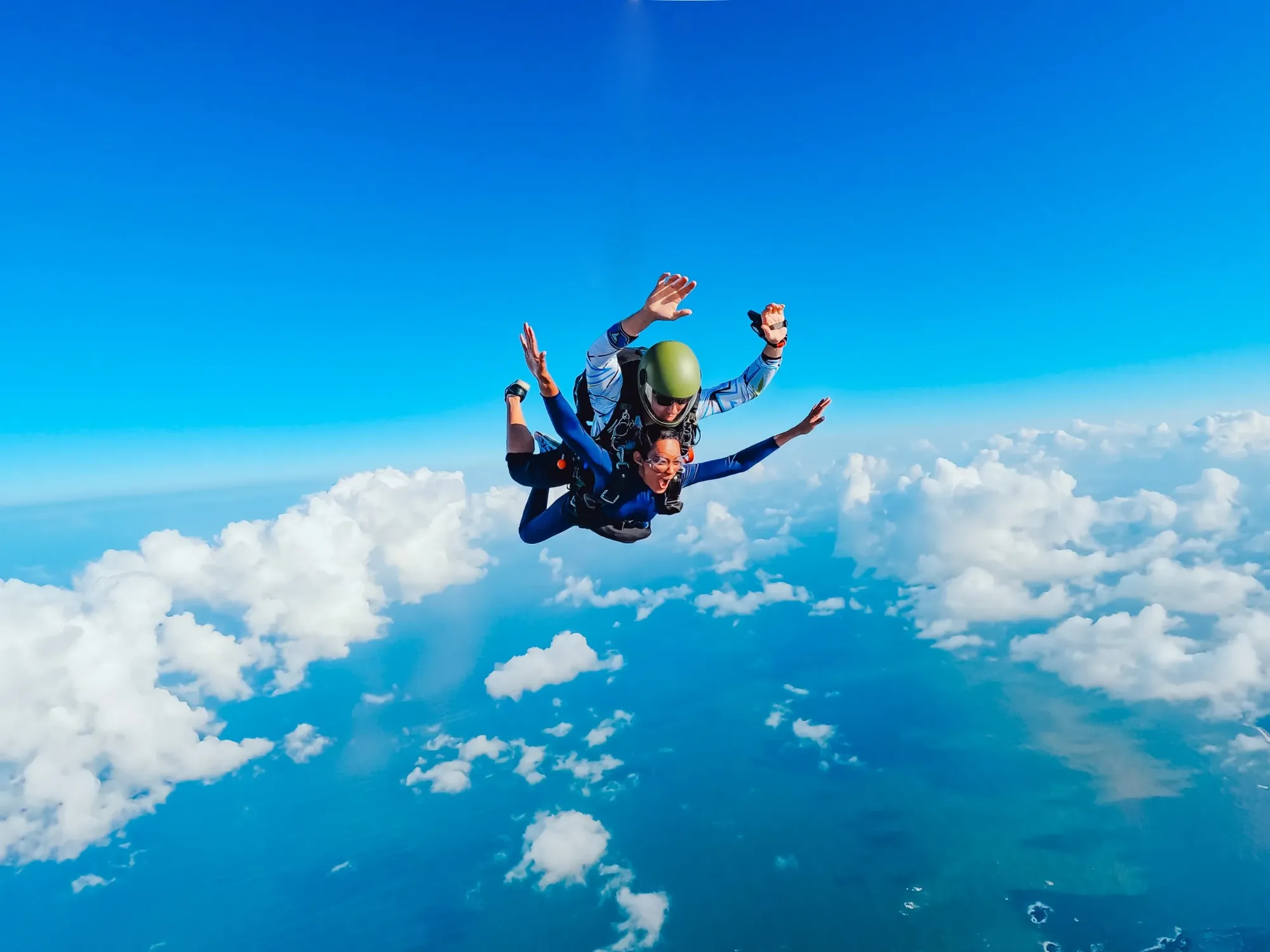
For about sixty seconds — sometimes a little less — you are pure motion. Warm tropical air rushing past your face at terminal velocity. The sea, or the rice paddies of the Mae Taeng valley, or the slow green spine of the northern mountains, coming toward you. Then a deep, soft tug as the canopy opens, and suddenly you are floating: gliding above a country that, from this height, looks impossibly close.
This is what skydiving in Thailand has quietly become for tens of thousands of travelers a year. Not a stunt. Not a dare. One of Asia's signature bucket-list experiences — and one of the most accessible ways for a first-time jumper to step out into the sky.
This guide is the definitive map of where to do it, who to do it with, what it costs, when to go, what to expect, and how Thailand stacks up against the other great skydiving destinations of the world. Four real dropzones. Two regions. One country that has become unexpectedly excellent at this.
1. Why Thailand Became One of Asia's Biggest Skydiving Destinations
Thailand wasn't an obvious skydiving country a decade ago. There were no famous dropzones, no global tandem festivals, no viral freefall photos of the country circulating on travel feeds. What changed wasn't the geography. The geography was always perfect — long coastlines, predictable seasons, calm offshore winds, and a topography that looks spectacular from altitude. What changed was everything around the geography.
Tourism infrastructure caught up first.
Bangkok grew into one of the most-visited cities on Earth, with two international airports, a deep bench of Western-standard hotels, and a domestic transport network that lets visitors move between the capital, the coast, and the islands in hours rather than days. Pattaya, an hour and a half southeast of Bangkok by road, became a major adventure tourism hub. Phuket and the Andaman coast positioned themselves as luxury destinations. Chiang Mai matured into a digital nomad capital and the gateway to the country's mountainous north.
Adventure tourism took root.
The same travelers who once flew to Thailand for full-moon parties and temple tours started spending money on Muay Thai camps, scuba diving in Koh Tao, jungle ziplines, kiteboarding in Hua Hin, and — increasingly — skydiving. The market was there. It just needed the supply.
Affordability sealed it.
A tandem skydive in Thailand is often dramatically cheaper than the equivalent jump in Australia, Switzerland, the United States, or the UAE — sometimes by 30 to 50 percent. For travelers already in the country, the math is easy: a once-in-a-lifetime experience that can cost less than a nice dinner for two back home, with scenery most jumpers anywhere in the world would envy.
The climate cooperates.
Thailand sits in a sweet zone where, across the year, somewhere in the country is in good jumping weather. The dry season (broadly November through April) delivers month after month of clear skies, low winds, and the long visibility that makes scenic jumps spectacular. Even in the wetter months, mornings are often jumpable, and operators schedule around the weather rather than against it.
Two regions did the rest.
The decisive factor was geographic. Two serious commercial skydiving clusters took root within easy striking distance of Thailand's two main visitor hubs: the Eastern Seaboard near Pattaya, and Mae Taeng outside Chiang Mai. Each cluster runs two professional dropzones. Together they handle the overwhelming majority of skydives in the country, and they make Thailand one of the very few places in Asia where a traveler can genuinely choose between a tropical-coast jump and a mountain-jump on the same trip.
Featured snippet — "Where can you skydive in Thailand?" Thailand has four commercial dropzones across two regions, but only two are currently taking bookings: Thai Sky Adventures in Chonburi and Dropzone Thailand in Rayong, both on the Eastern Seaboard near Pattaya. The two northern operators, Skydive Chiang Mai and Skydive Thailand, share one airfield at Mae Taeng outside Chiang Mai, and both are closed — the Civil Aviation Authority of Thailand ordered operations at Phusanfah Airfield to halt from 1 June 2026, with no reopening date announced.
2. The Thailand Skydiving Map: Two Regions, Four Dropzones
Thailand's skydiving landscape, unlike its scuba diving or rock climbing scene, is concentrated. It is not spread evenly around the country, and it is not stretched along the southern islands the way most of Thailand's tourism is. It clusters in two precise places: the Eastern Seaboard south of Bangkok, and the Mae Taeng valley north of Chiang Mai.
This concentration is not an accident. Both clusters combine the same rare ingredients: an aviation-friendly airfield, year-round flyable weather across most of the calendar, dense leisure tourism infrastructure, easy logistics from a major airport, and a large enough English-speaking adventure-tourism market to sustain a full-time skydiving operation.
Below is a snapshot of all four. The dropzone-by-dropzone deep dives that follow fill in the texture.
| Dropzone | Region | Closest hub | Aircraft | Max altitude |
|---|---|---|---|---|
| Thai Sky Adventures | Eastern Seaboard | Pattaya (~30 min) | Pilatus PC-6 Porter | 13,000 ft |
| Dropzone Thailand | Eastern Seaboard | Pattaya (~1 hr) | Cessna Caravan turbine | 13,500 ft |
| Skydive Chiang Mai | Northern Thailand | Chiang Mai (~50 min) | Turbine aircraft | 13,000 ft |
| Skydive Thailand | Northern Thailand | Chiang Mai (~50 min) | Turbine aircraft | 13,000 ft |
How to read this map
If you're coming through Bangkok or already in Pattaya: the Eastern Seaboard cluster is two hours from the capital and minutes from the beach. Both DZs jump over the Gulf of Thailand. This is the country's classic tropical-coast skydive.
If you're flying into Chiang Mai or doing a northern Thailand circuit: the Mae Taeng cluster is about 50 minutes from Chiang Mai city and jumps over a mountain-and-valley landscape that is genuinely different from the southern coastal experience. Northern Thailand skydiving is the under-told half of the country's scene.
If you're a licensed sport jumper: Thai Sky Adventures is widely regarded as the most established sport-jumping operation in the country, with AFF training and licensed-jumper facilities. The other three DZs all welcome licensed visitors — call ahead to coordinate.
If you're in Bangkok and the weather's bad or you have a non-jumping partner: the Bangkok area also has indoor wind tunnel facilities suitable for simulated freefall. Useful as a primer or as a contingency, but not a substitute for the real thing.
3. Every Major Skydiving Dropzone in Thailand
This is the section every first-time visitor is looking for: the actual, on-the-ground options. Four profiles below — two coastal, two mountain — each with the operational reality you need to choose between them. We have intentionally avoided fabricated specifics and stuck to verified facts about each operation: aircraft, altitude, location, services, and what the experience genuinely looks like.
3.1 Eastern Seaboard cluster — Pattaya & Rayong
Thailand's coastal skydiving scene is split between two distinct DZs about an hour apart from each other along the Gulf coast. They share the same general visual identity — palm-fringed coastline, turquoise sea, agricultural land inland — but each is a separate professional operation with its own character, aircraft, and customer fit.
Thai Sky Adventures — Chonburi (Pattaya region)
- Location: 777 77, Pattaya City, Si Racha District, Chon Buri 20230 — 25 km north of Pattaya, 96 km south of Bangkok
- Closest hub: Pattaya (free hotel pickup included in every tandem package, 7 AM or 10 AM departure); just over 1 hour by road from Bangkok
- Aircraft: turbine aircraft purpose-built for parachute operations
- Max altitude: 13,000 ft, with up to 60 seconds of freefall
- Services: Tandem · AFF training · licensed-jumper facility · onsite shooting range
- Operating credentials: founded by international instructors with 40+ years combined skydiving experience and 30+ years UK skydiving operations heritage; follows USPA guidelines; accepts FAI licenses; regularly inspected by Thai aviation authorities
- Hours: open 7 days a week, 8:00 AM – 5:00 PM
- 2026 tandem pricing: Basic Tandem THB 9,450 ≈ $281 · Tandem with Video THB 13,250 ≈ $394 · Tandem with Video & Photos THB 14,250 ≈ $424 · Deluxe (full video + high-res photos) THB 15,250 ≈ $454 · Bangkok shuttle from Novotel Siam Square ฿500 round-trip
If Thailand has a flagship commercial skydiving experience, this is it. Thai Sky Adventures has been the country's most established international tandem operation for nearly two decades, founded by international instructors with 40+ years of combined skydiving experience and a 30+-year UK skydiving operations heritage behind the team.
The vibe is tropical, easy-going, professionally run. The day starts with a free hotel pickup from any Pattaya-area hotel (included in your tandem price; choose 7 AM or 10 AM). Bangkok travellers can take the daily ฿500 shuttle from Novotel Siam Square at 09:30 — five minutes' walk from BTS Siam Station, Exit 6. Once at the dropzone, the flow is briefing, gear check, then a climb to altitude in a turbine aircraft. Exit at 13,000 ft. Up to 60 seconds of freefall. Five to seven minutes under canopy over the Gulf of Thailand. Guided landing. Total experience is around 5 hours on the ground, including the 30–45 minute onsite video edit if you've bought a video package.
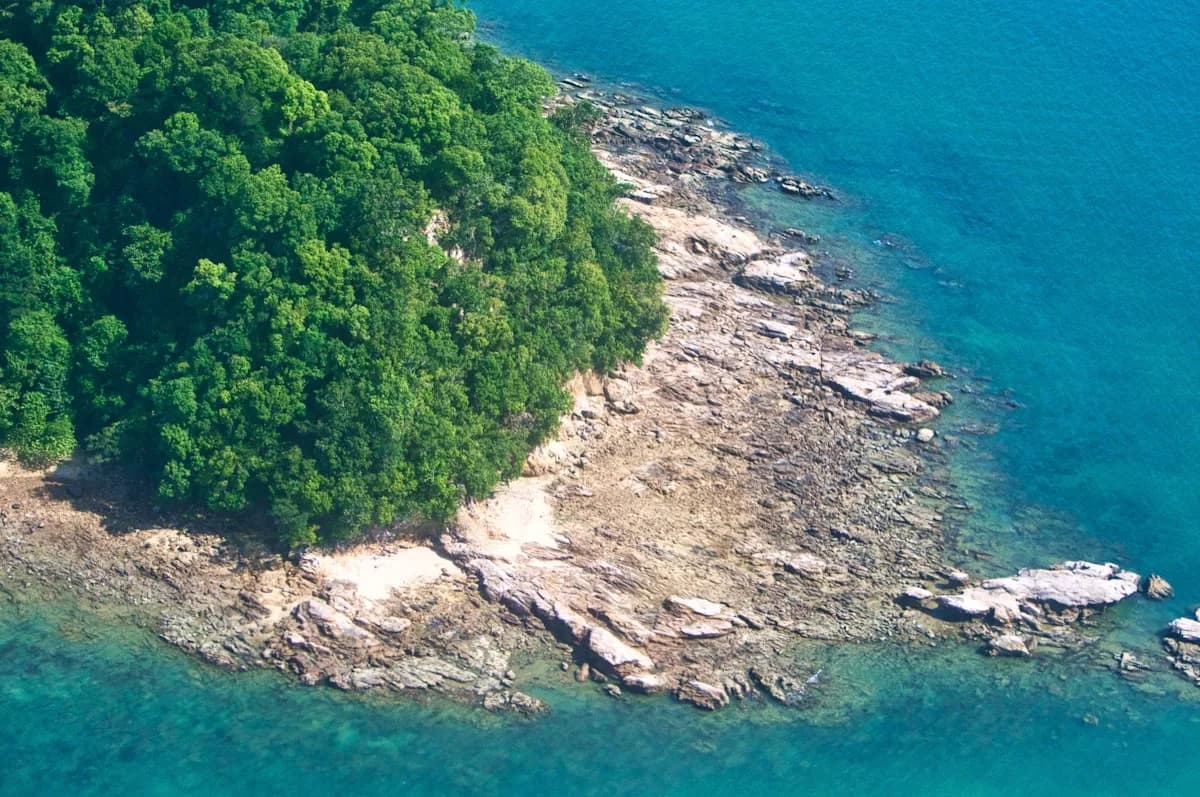
What you actually see is the long curve of Thailand's eastern coastline meeting a turquoise Gulf. On clear days the visibility is enormous — kilometers of coast in either direction, fishing boats below, the tiered haze of mountains inland. Photographers consistently rate this as one of the more cinematic tandem backdrops in Southeast Asia.
Best for: first-time tandem jumpers who want a serious, scenic, internationally-pitched experience; couples on a Pattaya holiday looking for a once-in-a-lifetime add-on; Bangkok-based travelers and expats; licensed jumpers wanting Thailand's most established sport-jumping facility.
Dropzone Thailand — Rayong
- Location: 95 Moo 4, Chakphong, Klaeng District, Rayong 21190 — Eastern Seaboard, ~1 hour east of Pattaya, ~2.5 hours from Bangkok
- Closest hub: Pattaya (~1 hr); Bangkok (~2.5 hrs)
- Aircraft: turbine aircraft (operator advertises all-new equipment)
- Max altitude: 13,000 ft
- Services: Tandem · AFF training; USPA standard
- Hours: 09:00 – 18:00
- Booking: via Facebook Messenger, LINE (@dropzonethailand), or phone (+66 62 461 4654) — pricing not publicly listed
The newer of the two Eastern Seaboard operations, but a serious one. Dropzone Thailand operates from a private airfield at 95 Moo 4, Chakphong, Klaeng District, Rayong on the Gulf of Thailand — about an hour east of Pattaya and roughly two and a half hours from Bangkok. The flagship experience is a tandem jump to 13,000 ft, followed by up to 60 seconds of freefall and a 360-degree ocean panorama on the canopy ride down. The operator markets itself as Southeast Asia's biggest dropzone with all-new equipment and stunning Gulf views; bookings run through Facebook Messenger and LINE rather than a public price list.
The aircraft is a Cessna Caravan turbine, the most common high-performance jump platform in commercial skydiving worldwide. The instructor team is USPA-certified, and AFF training is available for those pursuing a license.
The Rayong location is slightly less convenient than Si Racha as a tourist add-on — you're committing to a longer drive from Pattaya — but the trade-off is a more remote, less-trafficked airfield. Both Thai Sky Adventures and Dropzone Thailand exit at 13,000 ft; the choice is really logistics and operator preference. For most Pattaya-based travellers, Thai Sky's included free hotel pickup and shorter drive tip the balance. For Rayong-based travellers or those wanting a less-crowded airfield, Dropzone Thailand makes sense.
Best for: travelers comfortable with a longer transfer who want the highest exit altitude in the country; combined Pattaya–Rayong itineraries; jumpers who want a quieter, more remote DZ feel.
3.2 Northern Thailand cluster — Chiang Mai (Mae Taeng)
The Chiang Mai mountain dropzone listing — currently closed, kept live for status and reopening updates.
This is the half of Thailand's skydiving scene that travel media tends to forget. Two professional dropzones operate out of the Mae Taeng valley, about 50 minutes north of Chiang Mai city, jumping over a landscape that is genuinely different from the country's southern coastline — green mountain ridges, the Mae Ngat reservoir and dam, terraced farmland, and the slow rise of the northern range toward Burma. If you are doing a northern Thailand circuit (Chiang Mai, Pai, Chiang Rai), this is your opportunity to fold a skydive into the trip.
Skydive Chiang Mai — Mae Taeng (currently closed)
- Location: 444 Moo 7, Tambon Inthakin, Amphoe Mae Taeng, Chiang Mai 50150
- Closest hub: Chiang Mai city (~50 minutes by road)
- Aircraft: PAC 750 (single-engine turbine, purpose-built for parachute operations)
- Max altitude: 13,000 ft, with up to 60 seconds of freefall
- Services: Tandem; AFF course; USPA-certified instructors
- Format: 15–20 minute scenic flight to altitude, 4–5 minutes under canopy
- 2026 pricing (skydivechiangmaiofficial.com): Silver THB 12,750 ≈ $379 · Premium Silver (with round-trip Chiang Mai transport) THB 14,250 ≈ $424 · Gold THB 15,550 ≈ $463 · Premium Gold (with transport) THB 16,850 ≈ $501 · Diamond (2-person package) THB 34,400 ≈ $1,023 · AFF course ฿88,000
- Photos and standard edited video are emailed to every tandem customer within 48 hours
Northern Thailand's long-standing mountain dropzone, currently paused and not taking bookings. Skydive Chiang Mai operates from a dedicated airfield in Mae Taeng, the same valley where the Mae Ngat dam and reservoir create some of the most distinctive landscape in northern Thailand. Tandems jump to 13,000 ft with up to 60 seconds of freefall, after a 15–20 minute scenic flight to altitude that is itself part of the experience.
The package structure is built around transport, not media. Silver and Gold are the standard tandem tiers; Premium Silver and Premium Gold add round-trip transport from Chiang Mai city. A two-person Diamond package is available at THB 34,400 ≈ $1,023. Photos and a standard edited video are included for every tandem customer (emailed within 48 hours), regardless of tier. AFF training is offered separately at ฿88,000. Bookings run through hotel desks in Chiang Mai or directly with the operator at skydivechiangmaiofficial.com.
The visual difference from the coast is the entire point. Where the Eastern Seaboard cluster gives you sea and beach, Mae Taeng gives you mountain ridges, agricultural mosaic, the bright surface of the Mae Ngat reservoir, and the muted green spine of the northern range. It is a categorically different jump.
Best for: travelers visiting Chiang Mai who want to add an extraordinary day to their trip; first-timers who prefer a mountain-and-valley jump over a coastal one; jumpers building a northern Thailand circuit.
Currently closed. Phusanfah Airfield in Mae Taeng — the only skydiving dropzone near Chiang Mai, used by both Skydive Thailand and Skydive Chiang Mai — was ordered to halt operations by the Civil Aviation Authority of Thailand from 1 June 2026, and no reopening date had been announced as of 17 August 2026. The listing below is kept live so the status stays findable, and any prices shown are historic. Thai Sky Adventures near Pattaya and Dropzone Thailand in Rayong are both still flying.
Currently closed. Skydive Chiang Mai is not taking bookings. Its listing is kept live so the status stays findable, and any prices shown are historic.
Skydive Thailand — Chiang Mai
- Location: Phusanfah Airfield, Mae Taeng, Chiang Mai (~50 minutes from the city)
- Aircraft: NZ Aero 750XL (purpose-built single-engine turbine for parachute operations)
- Max altitude: 13,000 ft MSL
- Services: Tandem · AFF student courses · sport skydiving for licensed jumpers
- Operating volume: 55,000+ skydives annually; year-round operation
- 2026 pricing (skydivethailand.com): Tandem Only THB 8,850 ≈ $263 · Silver (handcam video + screenshots) THB 12,750 ≈ $379 · Gold (personal cameraman, HD photos and video) THB 15,550 ≈ $463 · AFF from ฿88,000 · sport jumps from ฿950
- Payment: Thai baht cash, Visa, MasterCard, AliPay, WeChat Pay, local bank transfer
- USPA International Affiliate
The other brand at the same airfield, and also closed. Skydive Thailand ran tandems from a turbine aircraft to 13,000 ft and was built around an entry-tier price point: its base Tandem Only package was one of the most affordable real skydives in the country. It has not flown since the Civil Aviation Authority of Thailand halted operations at Phusanfah on 1 June 2026.
Three package tiers: Tandem Only (no media), Silver (mid-tier), Gold (premium). Pricing is posted in Thai baht. Payment is accepted in cash, all major cards, and the Chinese mobile wallets that have become standard at Thai tourist operations. Like its neighbor, the operation is USPA-certified.
It is worth being precise about what Mae Taeng is: one airfield, not two dropzones. Skydive Chiang Mai and Skydive Thailand are separate booking brands flying from the same runway at Phusanfah, which is why their package ladders differ but their altitude does not. That distinction stopped being academic on 1 June 2026 — because the closure was issued against the airfield, both brands went down together, and neither is taking bookings.
Best for: budget-conscious travelers who want a real skydive in the north without the premium-tier price; backpackers; jumpers who care about price and altitude, not media packages.
Currently closed. Phusanfah Airfield in Mae Taeng — the only skydiving dropzone near Chiang Mai, used by both Skydive Thailand and Skydive Chiang Mai — was ordered to halt operations by the Civil Aviation Authority of Thailand from 1 June 2026, and no reopening date had been announced as of 17 August 2026. The listing below is kept live so the status stays findable, and any prices shown are historic. Thai Sky Adventures near Pattaya and Dropzone Thailand in Rayong are both still flying.
Currently closed. Skydive Thailand is not taking bookings. Its listing is kept live so the status stays findable, and any prices shown are historic.
3.3 Bangkok wind tunnels — companion experience
Worth a mention even though wind tunnel time is not technically skydiving. Indoor freefall facilities have grown into a legitimate part of the broader experience, and Bangkok has facilities suitable for everything from a fun first taste to serious body-flight training.
Three reasons it matters in this guide. First, on a rare bad-weather day, a wind tunnel session is the closest you can get to the freefall sensation without leaving the ground. Second, for nervous first-timers, a 60- or 90-second tunnel session a day or two before a real skydive can take an enormous amount of fear off the table — you've already felt the airflow, the body position, the noise. Third, for travelers with kids or non-jumping partners, the tunnel is an inclusive shared experience.
Use it as a complement to a real Thailand skydive, not a replacement. Tunnel time replicates one part of a jump (the freefall) imperfectly. It doesn't replicate the climb, the open door, the exit, or the canopy ride.
4. Which Thailand Dropzone Is Best for You?
Quick-fit recommendations for the most common traveler profiles. Use them as starting points — the right choice always depends on your dates, your group, and what's available when you book.
Best for first-time skydivers
Thai Sky Adventures (Eastern Seaboard) or Dropzone Thailand (Rayong). Both are built around tandem first-timers, both have long operational track records, and both deliver the kind of professional, well-paced experience nervous beginners need. The northern option, Skydive Thailand at Mae Taeng, would otherwise belong on this list, but it is closed until Phusanfah Airfield is cleared to reopen.
Best scenery — coastal
Both Eastern Seaboard DZs deliver the iconic Thailand coastal jump. Dropzone Thailand wins on the highest exit (13,500 ft) and the slightly more remote-airfield feel; Thai Sky Adventures wins on Pattaya proximity and the Pilatus Porter platform.
Best scenery — mountains and valley
Skydive Thailand — with Skydive Chiang Mai, in the same valley, currently paused. Both jump the same general Mae Taeng valley airspace and deliver northern Thailand's mountain-and-reservoir landscape. This is a categorically different visual from the south.
Best for backpacker budget
Skydive Thailand's entry-tier package is among the most accessible real skydive prices in the country. Northern Thailand transport in general is cheap, and Chiang Mai is well set up for budget travelers.
Best for experienced jumpers
Thai Sky Adventures, for AFF training and the country's most established sport-jumping facility. The other three operations welcome licensed visitors but Thai Sky's licensed-jumper infrastructure is the most developed.
Easiest from Bangkok
The Eastern Seaboard cluster — both DZs are reachable as a same-day round trip. Pattaya is two hours by road; Rayong adds another hour. The northern cluster requires a flight or sleeper-train transfer to Chiang Mai (~70 min flight), which makes it a multi-day commitment.
Best couples experience
Tandem skydives make extraordinary couples' experiences. All four operators are well set up for couples and often run side-by-side jumps from the same load. Pattaya tends to win on hotel/dining infrastructure for the wider trip; Chiang Mai tends to win on a more relaxed, less-touristy weekend feel.
Best for combining skydiving with a wider Thailand trip
If your itinerary already includes Bangkok and the islands, the Eastern Seaboard cluster integrates effortlessly. If your itinerary is northern (Chiang Mai, Pai, Chiang Rai, the Burma border), the Mae Taeng cluster is the natural choice. Many travelers don't realize they have both options.
5. What It's Actually Like to Do a Tandem Skydive in Thailand
This is the part of the guide every first-timer wants. Not the brochure version. The honest, step-by-step version of what the day actually feels like.
Arrival
You arrive at the dropzone. It probably looks smaller and more relaxed than you expected — a hangar, a few aircraft, an open-air briefing area, a manifest desk where staff check you in. Other people are already there, and they are not extreme athletes. They are a French couple in shorts, a guy from Chiang Mai who flew down for the day, three friends from Singapore who clearly drew straws to decide who jumps first. This is normal. You belong here.
Briefing
The pre-jump briefing usually runs about 15 to 30 minutes. You'll learn the body position for exit, the body position for freefall, what to do with your arms when the canopy opens, and how to lift your legs for landing. It is much simpler than you expect. The instructor's job, very deliberately, is to make sure you have only a few things to remember.
Suiting up
You'll be fitted with a jumpsuit, a harness, a cap or helmet, and goggles. The harness is tight. It should be tight. The instructor will check it twice. Then you meet your instructor. A good tandem instructor has done thousands of jumps and is in the business of reading nervous humans. They will be calm, slightly funny, fully professional, and they will not let you do anything wrong.
The aircraft ride
You board the aircraft, sit on a bench, feel it taxi, then take off. The climb to altitude takes between 15 and 20 minutes depending on the aircraft. This is, surprisingly, the part where nerves often settle. You're committed. There is nothing to decide. You're just looking out a small window at Thailand getting smaller, and at the sea or the mountains getting wider, and at the horizon getting impossibly flat.
The door opens
The door opens, and the wind hits, and your stomach reminds you what you signed up for. You shuffle to the edge. The instructor's voice is in your ear — three, two, one — and then your feet are no longer touching anything.
Freefall
For about 60 seconds, you are falling at roughly 200 km/h. It does not feel like falling. It feels like flying, or maybe like being held very firmly by an enormous, warm hand of wind. You can't really hear anything. Your face is pressed back. Your peripheral vision is everything. You forget — actually forget — to be afraid.
Canopy
A firm, soft pull. The wind noise stops. You're suddenly above Thailand instead of falling toward it. The next four to six minutes (seven to eight at Thai Sky) are probably the most peaceful minutes of your trip. The instructor steers. Sometimes they let you steer. The horizon is full of coastline or mountains and sky. People often start crying here, or laughing, or both.
Landing
Lift your legs. Slide your feet forward. The instructor lands first, you land second, both of you slide gently across the grass. Sometimes you stand up walking. Sometimes you don't. Either way, you're back.
Aftermath
You will be vibrating for an hour. Two hours. Sometimes the rest of the day. You will be unable to stop talking about it. You will hug strangers. You will text family at speeds you didn't know your thumbs were capable of. The video, when you watch it back that evening, will make you cry harder than the actual jump did.
Most first-timers arrive convinced they're going to be the one who panics, freezes at the door, or doesn't enjoy it. The data is overwhelmingly the other way. The vast majority describe it as one of the best things they've ever done — and many come back for a second jump within the same trip.
— SKYDIVE IN ASIA EDITORIAL TEAM
6. Is Skydiving in Thailand Safe?
This is the question every first-time jumper asks. The short answer is: commercial tandem skydiving with a professional operator is one of the safest forms of adventure recreation in the world, and all four of Thailand's commercial dropzones operate under USPA standards with internationally certified instructors. The longer answer is worth your attention.
How tandem systems are designed
Tandem skydiving was deliberately engineered to be the lowest-risk way to introduce someone to the sport. The instructor — who you are physically attached to — is responsible for every safety-critical action: the exit, the freefall body position, the parachute deployment, and the landing. The harness is dual-rated. The main parachute is paired with a fully independent reserve parachute. The reserve has its own automatic activation device that will deploy it if neither person has by a set altitude. There are, in other words, multiple redundancies between the worst case and any actual harm.
Instructors
All four Thailand operators advertise USPA-certified instructors. USPA (United States Parachute Association) ratings require substantial jump numbers and continuous currency. The instructor strapped to you in Chonburi or Mae Taeng is, in most cases, a working professional with thousands of personal jumps. They are not improvising.
Weather protocols
Skydiving is weather-sensitive on purpose. Operators ground for high winds, low cloud, electrical activity, or anything else that compromises canopy control or visibility. If your jump is delayed or canceled for weather, that is the system working as designed. Treat operators that wave concerns away on borderline days with skepticism, not gratitude.
Aviation oversight
The aircraft used for jump operations are regulated by Thailand's civil aviation authority and operate under commercial aviation rules. The pilots are licensed; the aircraft are maintained; the operation is not freelance.
The realistic risk frame
Skydiving is not zero-risk. No genuine adventure activity is. But tandem skydiving's safety record, properly contextualized, is comparable to or better than many recreational activities people undertake without thought — including driving on certain stretches of road. The honest framing isn't "it's perfectly safe." It's "the risks are well-understood, the systems are deeply engineered, and the people handling them do this professionally."
The single most important safety variable in skydiving is choosing a professional operator. Once you've done that, virtually every other risk has been engineered down. Don't book on Instagram. Don't book the cheapest mystery operator. Book through an established platform or directly with a verified dropzone.
7. How Much Does Skydiving in Thailand Cost?
All four operators publish their 2026 tandem pricing on their official sites. Skydive Thailand (closed since June 2026) (Mae Taeng) runs from THB 8,850 ≈ $263 for the basic Tandem Only package up to THB 15,550 ≈ $463 for the Gold personal-cameraman tier. Thai Sky Adventures (Si Racha, near Pattaya) prices its four tiers from THB 9,450 ≈ $281 (basic) to THB 15,250 ≈ $454 (Deluxe), and includes free Pattaya hotel pickup in every tandem package. Skydive Chiang Mai (closed since June 2026)'s six-tier structure spans THB 12,750 ≈ $379 (Silver) to THB 16,850 ≈ $501 (Premium Gold with transport), plus a THB 34,400 ≈ $1,023 two-person Diamond package. Dropzone Thailand books via Facebook Messenger and LINE rather than publishing public rates. Across the four operators, Thailand's tandem prices remain among the most accessible major-country tandems in the world.
What "package" means
What "package" means varies by operator. At Skydive Thailand the differentiator was media — Silver adds handcam video and screenshots, Gold adds a personal cameraman with HD photos and video. At Skydive Chiang Mai the differentiator was transport — Premium tiers add round-trip Chiang Mai transport on top of standard Silver/Gold (photos and a standard video are included on every tier). Both are closed, so treat those two ladders as historic. At Thai Sky Adventures, which is still flying, the ladder is purely media: basic, video-only, video-plus-stills, deluxe. Across operators, expect roughly ฿3,000–6,000 between tiers.
Whether to get the video
For most travelers — especially first-timers — getting the video is worth it. The brain doesn't process freefall the way it processes ordinary memory, and the photo/video package is, in practice, what you will actually remember the jump by in five years. Skipping it to save the equivalent of a nice dinner is one of the most common regrets we hear from first-time jumpers.
Seasonal variation
Pricing is fairly stable across the year, with modest premiums during peak tourism windows (Christmas to New Year, Chinese New Year, Songkran, Western school holidays). The bigger seasonal variable is availability, not price — peak weeks book out, and last-minute slots are rare.
Value comparison
Thailand sits in the value sweet spot of global skydiving. A professionally run tandem here is not "the budget version" of skydiving — it is a fully professional jump at a more accessible price point than equivalent operations in Australia, the United States, mid-range Europe, or Dubai. What you are paying more for in those other countries is usually a combination of higher operating costs, more dramatic scenery, and brand premium — not necessarily a safer or more skilled jump.
Featured snippet — "How much does skydiving cost in Thailand?" At the two dropzones currently taking bookings, tandem skydiving in Thailand runs from THB 9,450 ≈ $281 to THB 15,250 ≈ $454 at Thai Sky Adventures, with free Pattaya hotel pickup included, and Dropzone Thailand in Rayong is the cheapest entry point in the country. The northern pair at Mae Taeng — Skydive Thailand from THB 8,850 ≈ $263 and Skydive Chiang Mai up to THB 16,850 ≈ $501 — are closed, so those figures are historic. Thailand remains among the most affordable major-country tandem markets globally.
8. Best Time of Year to Skydive in Thailand
Thailand has a tropical monsoon climate, but for skydiving purposes the year breaks down into three windows.
November–February: the sweet spot
The cool dry season. Long stretches of clear blue sky, low humidity, lower winds, and the cleanest visibility of the year — across both regions. This is the best window to skydive in Thailand if you have the flexibility to choose. It is also the busiest tourist season, so book ahead. Northern Thailand can be cool in the early morning during this window — pack a layer for the climb.
March–May: hot and mostly flyable
Hot. Sometimes very hot. Visibility is generally still good, especially in the mornings, and most days are flyable. The trade-off is heat on the ground (you'll sweat through the briefing) and occasional pre-monsoon haze — particularly in the north, where seasonal agricultural burning can affect visibility in March and April. Morning slots are strongly preferred in this window.
June–October: the wet season
The southwest monsoon brings the rainier months. Despite the reputation, this is not a write-off for skydiving. Many days have jumpable mornings followed by afternoon storms, and operators schedule around the weather. The risk is logistical, not catastrophic. If you're traveling in the wet season, build at least a one-day weather buffer into your itinerary.
Time of day
Morning slots are your friend across every season in Thailand. Visibility tends to be cleaner before the heat of the day builds atmospheric haze, winds tend to be lighter, and any weather risk is more predictable. Booking a sunrise or mid-morning slot is the single highest-leverage decision a traveler can make.
9. Thailand vs Bali vs Dubai vs Australia
This is the comparison most travelers are running in their head, even if they don't say it out loud. Here is an honest one.
| Destination | Scenery | Price tier | Best for |
|---|---|---|---|
| Thailand (south) | Tropical Gulf coast | Mid | First-timers, Pattaya stopover, value |
| Thailand (north) | Mountain valley + reservoir | Mid | Chiang Mai itineraries, mountain landscape |
| Bali | Tropical island, volcanic | Mid | Bali trip add-on, island aesthetic |
| Dubai | Palm Jumeirah, desert + sea | Premium | Iconic Instagram shot, stopover travelers |
| Australia | Varies — beach to outback | Premium | Dedicated adventure trips |
Choose Thailand if you want the best price-to-experience ratio in the world, you're already traveling in Southeast Asia, and you want either a tropical-coast jump or a mountain-jump in a genuinely tourist-friendly destination — and the unusual ability to choose between both on one trip.
Choose Bali if Bali is on your itinerary anyway. Choose Dubai if the Palm Jumeirah shot is the specific reason you're skydiving. Choose Australia if you're building an adventure trip that combines skydiving with deeper sport-jumping culture.
All four of Thailand's commercial dropzones operate under USPA standards with internationally certified instructors, dual-canopy systems, automatic activation devices on the reserve, and weather protocols. Tandem skydiving with a professional operator is one of the safest forms of adventure recreation in the world. The single most important variable is choosing an established operator.
It depends on what you want. For tropical-coast scenery and proximity to Bangkok, the Eastern Seaboard cluster (Thai Sky Adventures in Chonburi or Dropzone Thailand in Rayong) is the answer. For mountain-and-valley scenery as part of a northern Thailand trip, the Mae Taeng cluster outside Chiang Mai (Skydive Chiang Mai or Skydive Thailand) is the answer. Both deliver professional 13,000+ ft tandem jumps.
Four currently active commercial dropzones: Thai Sky Adventures (Chonburi, Pattaya region), Dropzone Thailand (Rayong), Skydive Chiang Mai (Mae Taeng), and Skydive Thailand (Chiang Mai region). Bangkok also has indoor wind tunnel facilities for simulated freefall.
Tandem skydiving in Thailand starts around THB 8,850 (Skydive Thailand's entry tier), with most full-package experiences (including video and photo) ranging THB 10,000–18,000 depending on operator and tier. Thailand is among the most affordable major-country tandem markets globally.
Yes — all four Thailand dropzones are built around first-time tandem jumpers. You don't need any prior experience, training, or fitness baseline beyond what's required for the operator's weight and health policies.
Yes. The Eastern Seaboard cluster (Thai Sky Adventures and Dropzone Thailand) is the heart of Thailand's coastal skydiving scene, and a tandem jump here delivers genuine tropical-coast scenery at a fraction of the price of comparable jumps in the world's premium-tier markets.
Yes. Chiang Mai is the gateway to Thailand's northern skydiving cluster, with two USPA-certified operators based in the Mae Taeng valley about 50 minutes from Chiang Mai city: Skydive Chiang Mai and Skydive Thailand. Both jump to 13,000 ft over a mountain-and-valley landscape.
Comfortable athletic clothing — shorts or athletic pants, a t-shirt, sneakers (closed-toe, secure). Avoid skirts, dresses, sandals, flip-flops, or loose accessories. Operators provide jumpsuits, harnesses, and goggles. In northern Thailand during the cool season, bring a light layer for the climb.
Tandem rigs include a fully independent reserve parachute with its own automatic activation device. The combination of the main canopy, the reserve, and the AAD is one of the most-engineered redundancies in adventure sport. A complete parachute failure scenario is extraordinarily rare.
Operators set weight limits for safety reasons. Dropzone Thailand applies a sliding weight surcharge (THB 500–3,500) for jumpers over 90 kg. Each operator's limit and surcharge structure varies. Always be honest about your weight at booking — a same-day surprise is the worst time to discover an issue.
Yes. People expect freefall to feel like suffocating, and it doesn't. You can breathe normally throughout the entire jump.
Briefly, yes — most first-timers describe a wave of fear in the aircraft and at the door. Almost universally, that fear evaporates within seconds of the exit, and what replaces it is something closer to euphoria. The fear is not the experience. The flight is.
Strongly recommended, especially in peak tourist seasons (November to February, plus Songkran, Chinese New Year, and major Western holidays). Walk-in availability exists but is unreliable. For planned trips, book at least one to two weeks ahead — earlier in peak periods.
11. Plan your Thailand skydive
Most people who consider skydiving don't do it. They book the temple tour, the elephant sanctuary, the cooking class, the Phi Phi day trip, the rooftop bar, and they look at the skydiving option and think not this trip. There's nothing wrong with that. But the people who do choose it tend to come home telling the same story, which goes something like this: "I almost didn't go. I almost rebooked it. I almost convinced myself it wasn't the right time. And then I did it, and it became one of the things I'm most glad I've ever done."
Thailand makes this an unusually easy choice. The country has built — quietly, professionally, over a long time — one of the most accessible and beautifully-scenic skydiving destinations in the world. Four dropzones. Two regions. Coastline or mountains, your call. The operators are professional. The scenery is extraordinary. The price is, by global standards, very reasonable. The logistics, from Bangkok or Chiang Mai or a Pattaya hotel, are simple. And the experience itself, despite its reputation, is not the test of courage you fear it will be.
If you're already in Thailand, this is the trip add-on you'll talk about for years. If you're planning a trip to Thailand, build a day around it. We'll see you over the Gulf — or the Mae Taeng valley.
Browse every Thailand dropzone
Compare all four verified Thailand dropzones across both regions, see availability, and start planning the jump you'll remember for the rest of your life.
The editorial team behind Asia's dedicated skydiving discovery platform — working directly with dropzones and federations across the region to keep listings accurate.