On this page
- 01A Country That Hides Its Best View From You
- 021. Why Malaysia was — and could again be — one of Asia's most underrated skydiving destinations
- 032. Malaysia skydiving overview
- 043. Every Malaysian operation, mapped — with its verified 2026 status
- 054. Langkawi vs Kuala Lumpur skydiving
- 065. Indoor skydiving vs real skydiving in Malaysia
- 076. Which Malaysia skydive is best for you?
- 087. What it actually feels like to skydive in Malaysia
- 098. Is skydiving in Malaysia safe?
- 109. How much does skydiving in Malaysia cost?
- 1110. Best time of year to skydive in Malaysia
- 1211. Malaysia vs Thailand vs Bali for skydiving
- 1312. Frequently asked questions
- 1413. The sky is wide. The harness is waiting.
Quick answer (updated August 2026) — Malaysia currently has NO outdoor tandem skydiving in operation. Skydive Langkawi, the country's flagship 14,000 ft beach-landing operation, has been paused since the pandemic. Hawk's Sports Skydiving Club runs its tandem and AFF programmes at partner dropzones in Thailand, and the community-led Helang Megah club is not currently jumping. The one operation you can book today is WINDLAB, the vertical wind tunnel at 1 Utama near Kuala Lumpur. For a real jump, the nearest active dropzones are in Thailand — about two hours' flight from KL. Every operator's status below is verified directly, not recycled from old listicles.
A Country That Hides Its Best View From You
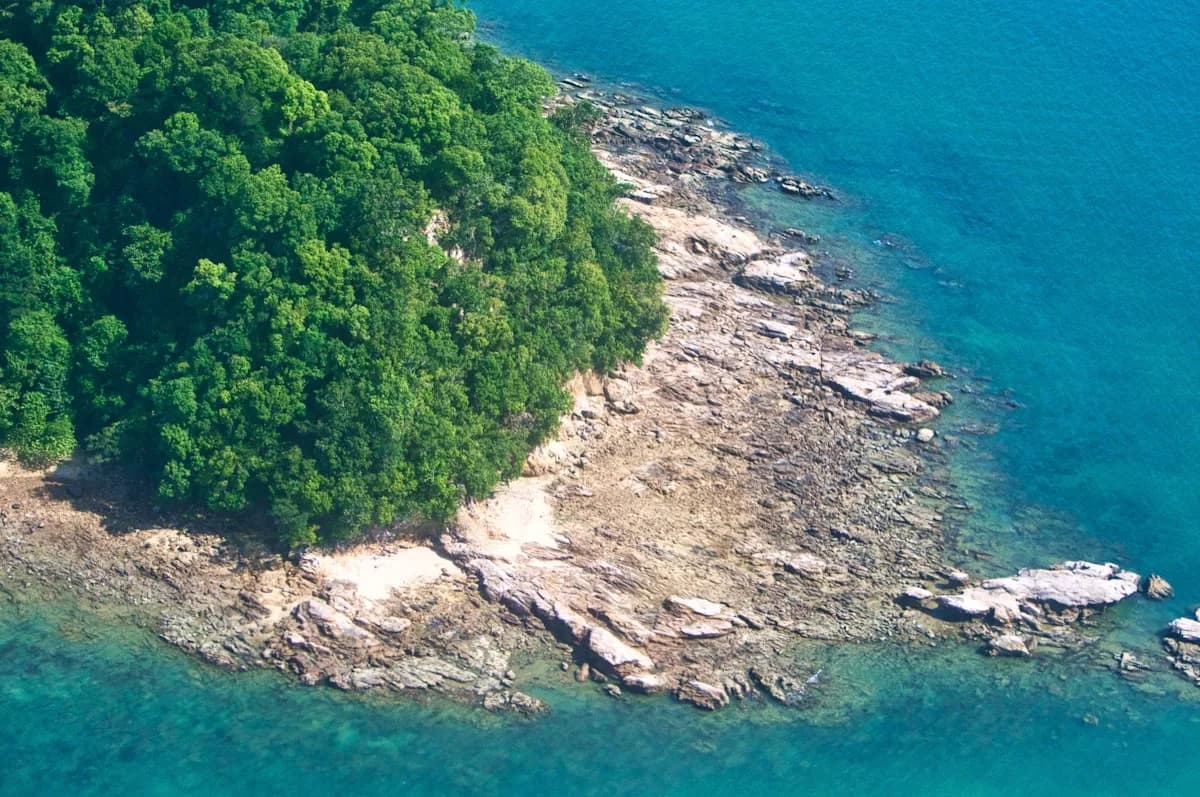
The Boeing 737 banks one last time over the Strait of Malacca, and for a few seconds the wing tip seems to graze the surface of a sea so calm it looks lacquered. Limestone karsts push up out of the haze — Langkawi's archipelago, ninety-nine islands of jungle and mangrove and quiet beach. The pilot levels the wings. You think, almost involuntarily: I want to fall through that.
That's the thing about Malaysia. It has a way of making you forget how high you already are.
For years, the next scene wrote itself: twelve hours later you'd be standing on a small airfield five minutes from Langkawi's airport, having your harness cinched for a 14,000 ft tandem that ended with your feet in the sand at Tanjung Rhu. That jump — Southeast Asia's only beach landing — is the reason Malaysia earned a place on the region's skydiving map. It's also exactly why we owe you the truth about what's changed.
Skydiving in Malaysia is not the obvious choice. Bali pulls the adventure brochures (even though, in 2026, there is still no active commercial drop zone in Bali). Thailand owns the volume play — three active dropzones, year-round operations, the lowest tandem prices in Asia. Dubai owns the gloss — Palm jumpsuits, two-tunnel campuses, that single iconic image. Malaysia sits quietly between all of them, holding two things none of those countries can offer in combination: a Southeast Asian beach landing onto an actual UNESCO Geopark, and a wind tunnel built into the world's seventh-largest shopping centre, twenty minutes from the Petronas Twin Towers.
If you're piecing together a longer Asia trip — Kuala Lumpur for the food, Penang for the heritage, Langkawi for the islands — Malaysia gives you a skydive that doesn't require detouring. It's already on the route. And for first-timers who have never done it, who don't yet know whether they'll like falling at terminal velocity, Malaysia is one of the gentlest places in Asia to find out: a glass tunnel in a mall lets you try freefall in 50 seconds at a Saturday matinee, then a 35-minute domestic flight puts you above an island where the canopy ride lands on white sand.
This is the definitive guide to skydiving in Malaysia in 2026 — written from operator-verified checks, not recycled listicles. And verification matters more here than anywhere else in Asia right now, because most of what Google will tell you about jumping in Malaysia is out of date: as of August 2026, no Malaysian outdoor dropzone is taking tandem bookings. Below: exactly what's open, what's paused, what each operation offered and may offer again, and how to actually get airborne this year.
1. Why Malaysia was — and could again be — one of Asia's most underrated skydiving destinations
There is a particular kind of traveller who arrives in Kuala Lumpur and instantly recalibrates. Maybe it's the food courts under the Twin Towers where Hainanese chicken rice runs eight ringgit while a fifty-storey glass tower watches you eat it. Maybe it's the LRT line that takes you from Bukit Bintang to Batu Caves for a couple of dollars and drops you under a 42.7-metre golden statue of Murugan. Whatever it is, Malaysia has a habit of beating expectations down quietly, and its skydiving scene works the same way.
Most travellers don't think of Malaysia as an adrenaline destination. They think of food. They think of jungle. They think — for some reason that always tracks back to the early 2010s — of the Petronas Towers as the set of a Catherine Zeta-Jones movie. They don't usually think of falling from 14,000 feet. Which is exactly what makes the experience hit so hard when it happens.
The geography is doing the work
Peninsular Malaysia gives you two completely different skydive environments inside a one-hour domestic flight. Climb out of KLIA on a Firefly turboprop or AirAsia A320, head north-west, and inside thirty-five minutes you're over the Andaman Sea looking down on a chain of jungle-covered islands. Tropical convergence keeps the water warm and the visibility long. The flight back into Subang is across paddy fields and palm oil estates that look, from altitude, like a perfectly tessellated green carpet.
For the indoor side — and don't underestimate indoor — the Bandar Utama corridor on Kuala Lumpur's western edge holds the only vertical wind tunnel in the country. You can be wheels-up in Sentosa, Singapore, in the morning and be flying solo at a Malaysian wind tunnel by lunchtime. The proximity of operations to international airports is something every other major Asian skydiving market would envy.
The economics work
When Langkawi was jumping, a tandem in Malaysia typically ran RM 1,500–1,800 (roughly USD 367–440) — materially cheaper than Dubai, competitive with Thailand, for a jump with objectively better scenery than either. That price-to-scenery ratio is a big part of why the operation's return is so keenly awaited. In the meantime, the same budget covers a Thailand tandem plus the flight from KL.
The progression ecosystem is quietly impressive
This part surprises people: there is a structured progression pathway for Malaysians who want a skydiving licence — it just doesn't happen on Malaysian soil right now. Hawk's Sports Skydiving Club (currently closed), the country's legacy club, runs its USPA-curriculum AFF and tandem programmes at partner dropzones in Thailand, with theory and community anchored back home in Johor.
If you're a digital nomad in KL kicking around for three months and you've ever wondered whether you could actually get licensed: the honest 2026 answer is tunnel time at WINDLAB now, an AFF block in Thailand when you're ready, and a logbook story that starts in a shopping centre. Plenty of jumpers have started worse.
2. Malaysia skydiving overview
Featured snippet — Where can you skydive in Malaysia in 2026? The only operation currently open to the public is WINDLAB Indoor Skydiving (vertical wind tunnel, 1 Utama Shopping Centre, Petaling Jaya). Skydive Langkawi (outdoor tandem, Padang Matsirat) is paused and has not jumped commercially since the pandemic. Hawk's Sports Skydiving Club runs tandem and AFF via partner dropzones in Thailand. Helang Megah Tactical & Skydiving Club (Selangor) is not currently operating.
The Malaysian skydiving map looks deceptively spread out on a recycled travel-blog listicle. In practice, four operations matter for travellers right now, and they sort cleanly along two axes: outdoor versus indoor, and tourist-facing versus club-style.
| Operation | Type | Location | Status (August 2026) | Best for | Public booking |
|---|---|---|---|---|---|
| Skydive Langkawi | Outdoor tandem | Padang Matsirat, Kedah | PAUSED — no commercial jumps since the pandemic | The bucket-list beach landing, when it returns | Not currently |
| WINDLAB Indoor Skydiving | Indoor tunnel | 1 Utama, Petaling Jaya | OPEN — seven days, year-round | Beginners, kids, fear-reduction, AFF prep | Yes, online |
| Hawk's Sports Skydiving Club | Club — jumps via Thailand | Segamat, Johor | Malaysia jumps paused; programmes run at Thai partner DZs | Licence pathway with a local community | By application |
| Helang Megah Tactical | Club | Bandar Sunway, Selangor | PAUSED — not running public jumps | Members & the local sport-aviation community | Not currently |
A simpler way to read that table: if you want to fly today, WINDLAB is the booking to make. If you want an outdoor tandem this year, plan a Thailand hop — Chiang Mai or the eastern seaboard — and treat Langkawi as the jump you're saving for its comeback.
Travel logistics in one paragraph
Logistics, in one paragraph: WINDLAB is about forty minutes from KLIA on a good run, inside 1 Utama — one of the largest malls in Southeast Asia — with sessions bookable same-day. When Langkawi resumes, it's a 55-minute flight to LGK and a five-minute taxi. For Thailand, budget carriers fly KL–Chiang Mai and KL–Bangkok several times daily; you can leave KL at dawn and be under canopy by mid-afternoon.
3. Every Malaysian operation, mapped — with its verified 2026 status
Skydive Langkawi — Southeast Asia's only beach drop (status: paused)
- Location: Office 7 Lot 35, Komplek ABZ, Jalan Airport, 07100 Padang Matsirat, Kedah
- Nearest airport: Langkawi International (LGK), 5 minutes by car
- Jump altitude: 14,000 ft flagship Platinum tandem (when operating)
- Landing: Tanjung Rhu Beach, on the northern coast of Langkawi
- Status: PAUSED — no verified commercial jumps since the pandemic; official website offline and social channels quiet since late 2021
- Historical price band: RM 1,500–1,800 tandem-only; higher tiers with media bundles
- Status verified: July 2026, by Skydive In Asia
Here's what the operation looked like at its peak — because it matters for what may come back. The drive from Langkawi International took under six minutes; you could land on a lunchtime flight from KL and be at the dropzone before your hotel had your room ready.
The climb was the part most people weren't ready for. Langkawi is small enough that by 14,000 ft the entire archipelago resolved beneath you — ninety-nine islands, the Andaman Sea shading from turquoise to deep navy, Thailand's coastline on the horizon.
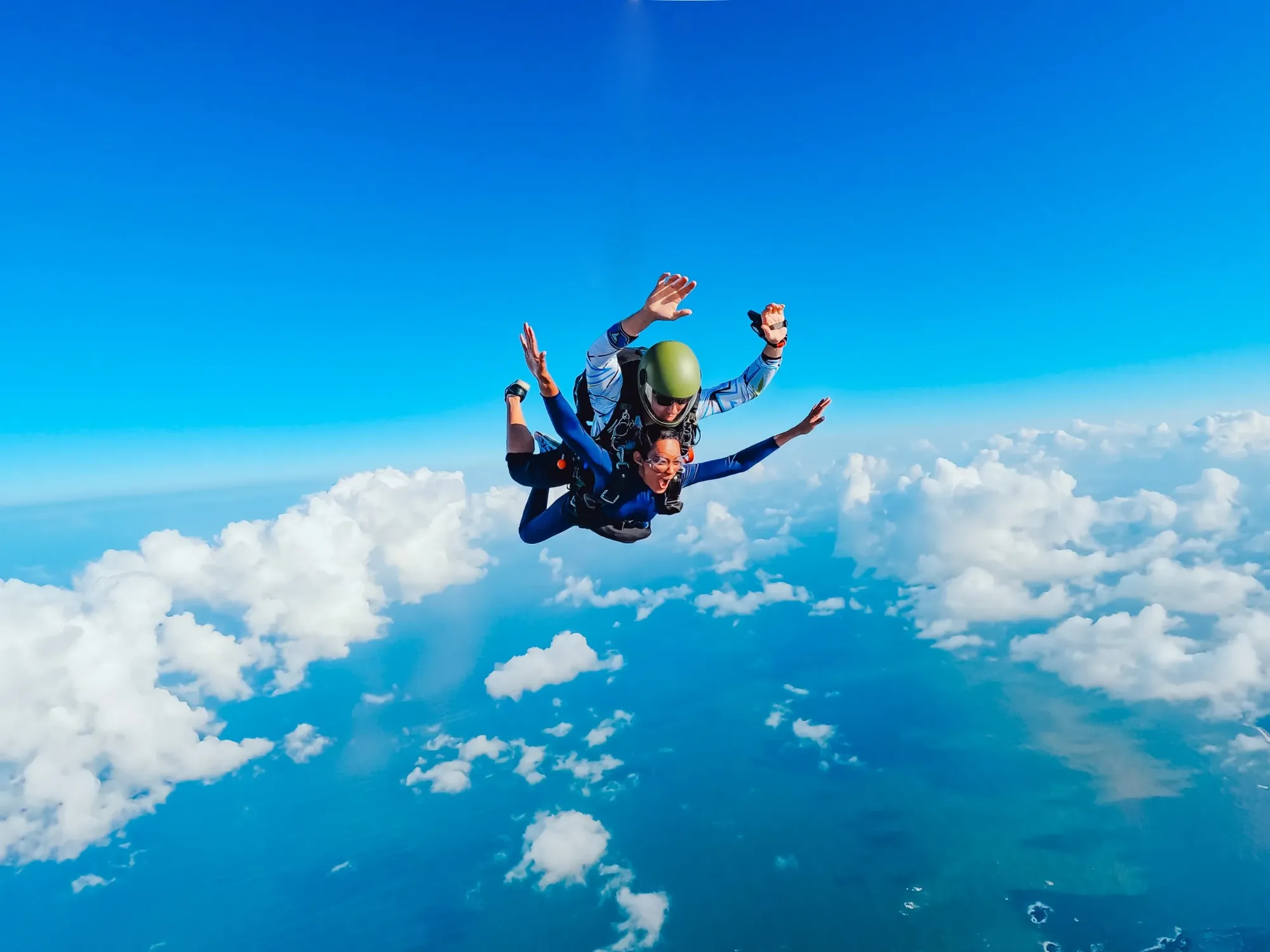
The freefall over Langkawi was what every skydive marketing reel tries to suggest and rarely delivers: a full minute over a UNESCO Global Geopark.
And the beach landing was the differentiator — feet down on the sand at Tanjung Rhu. There are very few places in the world where a tandem ends on a beach, and there were none elsewhere in Southeast Asia.
What happened — and will it come back?
- Last verified commercial jumps date to the pandemic era; a late-2021 reopening announcement for domestic tourism never publicly translated into resumed jumping
- The operator's .com domain has since lapsed — ignore whatever is hosted there now, it is not the real operation, and the old published email no longer receives mail
- The Facebook page (38K followers) and Google listing (4.7★) remain online, which keeps stale 'open now' signals circulating on travel blogs — this is why so many 2026 articles still list Langkawi as bookable
- Skydive In Asia is in direct contact channels with the operator's remaining presence and will relist the dropzone the moment jumps verifiably resume
If it returns
- Expect the 14,000 ft Platinum tandem and the Tanjung Rhu beach landing to headline again
- Expect December–April to be the operative season window (west-coast dry season)
- Expect pricing to reset — treat the historical RM 1,500–1,800 band as a reference, not a promise
Pair with: Langkawi cable car (Panorama), Kilim Karst Geoforest mangrove tour, jet-ski island-hop to Pulau Beras Basah.
WINDLAB Indoor Skydiving — Malaysia's only vertical wind tunnel
- Location: S222A & S601, Level 2, 1 Utama Shopping Centre, 1 Lebuh Bandar Utama, 47800 Petaling Jaya, Selangor
- Nearest airport: KLIA (35 minutes by Grab); Subang/SZB (10 minutes)
- Tunnel: 10-metre tall vertical wind tunnel; wind speeds up to ~250 km/h
- Age range: 3 to 100+ (no upper age limit)
- Standard package: 2 flights of 50 seconds each per person
- High Ride add-on: +RM 35 to be carried by the instructor toward the top of the 10-metre column
- Typical price band: Beginner packages from around RM 108 — one of the lowest tunnel entry prices in Asia
If you've never tried indoor skydiving, the easiest way to understand it is this: WINDLAB takes the part of skydiving that most people are afraid of — the freefall — and puts it inside a glass cylinder in a shopping centre in Petaling Jaya, where you can practise it as many times as you want with an instructor's hands on your harness. That's it. That's the value proposition. And it is one of the most underrated entry points into the sport in all of Asia.
The facility itself surprises people the first time they see it. 1 Utama is the seventh-largest shopping centre on earth — a half-million-square-metre maze of food courts and skating rinks and rooftop forests — and inside it, on Level 2, is a 10-metre transparent column blowing 250 kilometres an hour straight up. Couples watch from the free viewing gallery while their partner is whisked airborne by an instructor in a turquoise flightsuit. Kids press their faces to the glass. Old men in songkok watch their granddaughters fly.
The session works like a real skydive in miniature. You arrive an hour before your slot, sign waivers, and go into a 30-minute training block with your instructor — hand signals, body position, the four-points-of-contact entry into the airflow. Then you gear up: helmet, goggles, earplugs, flightsuit over your regular clothes (closed-in shoes essential — sneakers, double-knotted laces). You enter the staging area as a small group of three or four flyers. You take turns. Your instructor's right next to you the whole time, holding your harness, correcting your arch, occasionally moving you a metre off the floor and back down.
For an extra RM 35, the High Ride pushes you to the top of the 10-metre tunnel — the closest indoor-skydiving sensation to the real freefall, and almost universally the moment first-timers come out laughing.
Who WINDLAB suits best
- Absolute beginners who want to try freefall before committing to an outdoor tandem
- Families with kids — the youngest can be three years old
- Couples on a KL stopover who want a low-friction, high-photo adventure between dim sum and dinner
- AFF students preparing for body-position training before their first solo jump
- Anyone who has wanted to skydive but couldn't, due to age, mobility limitations, or weather windows
Realistic limitations
- It is not skydiving. There is no canopy ride, no scenery, no aircraft, no altitude
- The standard 2-flight package is short — 100 seconds of total flight time. Most people want to upgrade
- It can be intense the first time the wind hits your face
Pair WINDLAB with an outdoor tandem later in the trip — Thailand this year, Langkawi when it returns — for the full beginner arc: tunnel confidence first, sky second.
Hawk's Sports Skydiving Club / Skydive Malaysia — the legacy club (jumps now run in Thailand)
- Location: 187, Jalan Sawi, Taman Tan Leng Ann, 85000 Segamat, Johor
- Founded: 1980, by Azlan — one of the original ten civilians to jump in Malaysia
- Status: club active as a community and training pathway; jumping on Malaysian soil is currently paused (airspace and aircraft constraints)
- Tandem and AFF programme: conducted at partner dropzones in Thailand under the club's USPA-curriculum programme
- Pricing: programmes priced as packages — enquire directly via the club
Hawk's is one of those operations the casual tourist will probably never end up at, and it's worth understanding why. The club is a first-jump school, not a tourist tandem product. It's been running since 1980. It has trained celebrities, ministers, government uniformed officers, and a long quiet line of regular Malaysians who decided one ordinary weekend to learn how to skydive. Its founder, Azlan, was one of the first ten Malaysian civilians to qualify as a skydiver, and the club still bears that pioneering culture.
What Hawk's historically did locally, in Segamat, was the traditional static-line course — six hours of ground theory before anyone touched an aircraft, then a 3,500 ft first jump earned rather than bought. Under current airspace and aircraft constraints, the club has paused jumping on Malaysian soil; the course culture survives in its Thailand programme.
What Hawk's doesn't do locally is tandem and AFF. Both are run under a partnership with a Thailand-based dropzone, with the Hawk team accompanying students for a packaged 7- or 14-day course that includes accommodation and airport transfers. This is an unusual structure but it's a sensible one: Malaysia's airspace and weather conditions don't suit large-volume tandem operations the way Thailand's do, and the partnership lets Hawk's students access higher-altitude jumps and a richer training environment without compromising on the cost. The full A-licence track adds 5 coach jumps, 2 hop-and-pops, 10 solo jumps, and a packing course on top of the AFF block.
Who Hawk's suits best
- Malaysians pursuing a skydiving licence with a local community around them
- Jumpers who want the USPA AFF curriculum with established Thai dropzone infrastructure
- Anyone who prefers the earn-your-jump course culture over a turn-up-and-jump tandem
Realistic limitations
- No jumping currently on Malaysian soil — all programmes run at partner dropzones in Thailand or Indonesia
- Application-based, not a walk-in tourist product
- Timelines depend on course cohorts and travel windows
Helang Megah Tactical & Skydiving Club — the community club (status: paused)
- Location: Bandar Sunway, Selangor
- Model: community-led club, enquiry-based — never a walk-in tourist operation
- Status: not currently running public jumps (verified July 2026)
- Contact: via Instagram @helangmegahtactical
Helang Megah is the smallest of Malaysia's operations and the hardest to pin down — a genuinely community-led club rather than a commercial dropzone. As of mid-2026 it is not running public jumps; our direct enquiries to the club are ongoing, and this page will update if that changes.
Within the Malaysian sport-aviation ecosystem, Helang Megah occupies a useful niche: it offers a tighter, more community-oriented alternative for jumpers who don't want to enter the static-line course pipeline at Hawk's, or who want to be part of a smaller, more frequent-flying social circle. For travelling tourists looking for a one-off tandem, however, it's a less practical first contact than Skydive Langkawi.
Who Helang Megah suits best
- Members of the local sport-aviation community
- Aspirant club jumpers happy to build a relationship before a jump
- Anyone tracking the grassroots side of the Malaysian scene
Realistic limitations
- Not currently operating public jumps
- No published pricing or schedule — enquiry only
- Not suitable for tourists on a timeline
4. Langkawi vs Kuala Lumpur skydiving
This is the question every traveller planning a Malaysia trip used to ask — and will ask again the day Langkawi reopens. For 2026 the honest comparison is simpler: Kuala Lumpur has the flying you can book (WINDLAB), and Langkawi has the flying worth waiting for.
Langkawi is the bucket-list jump. It's the one you tell people about at dinner parties for the next five years. The 14,000 ft platinum tandem with Skydive Langkawi gives you everything a first-timer is hoping for: maximum altitude, longer freefall, an island archipelago view that gets stitched into your memory whether you have the photo pack or not, and a beach landing on white sand. It is also more committed in terms of trip structure — you need to actually be in Langkawi, which means a domestic flight, a hotel, and ideally another full day to enjoy the island. The reward is proportional. If you only get to do one Malaysia skydive in your life, this is the one.
Kuala Lumpur is the gateway jump. WINDLAB Indoor at 1 Utama isn't an outdoor skydive; it's the part of the outdoor experience — the freefall, the body position, the wind in the face — extracted and made repeatable. It costs RM 108 instead of RM 1,800. It takes an hour instead of half a day. You can do it on a layover. Couples can do it together. Kids as young as three can do it. And for first-timers who don't yet know if they'll like falling — for the friend who said yes to the trip but is now quietly terrified about the actual jump — WINDLAB is the most respectful entry point in Asian skydiving.
The luxury and city-energy difference is real. Langkawi feels like a fade-to-white tropical retreat — limestone cliffs and slow lunches and a sky that turns gold around 6 p.m. Kuala Lumpur is the opposite: a tropical megacity, all glass towers and night markets and 24-hour mamak joints, and a wind tunnel in the corner of one of the largest shopping centres on earth. The Langkawi jump is the experience. The KL jump is the appetiser.
Best combination
For now: land in KL, do the food and the tunnel, and if the outdoor itch needs scratching this trip, add a two-day Thailand hop — KL to Chiang Mai is under three hours in the air. When Langkawi returns: two days in KL with WINDLAB, then the LGK flight for the beach landing. That itinerary is worth the wait.
5. Indoor skydiving vs real skydiving in Malaysia
The first time a non-jumper hears about indoor skydiving, the reaction is almost always: is it really like the real thing? The honest answer: yes and no, and the differences are exactly the differences that make it valuable.
Indoor skydiving — what WINDLAB does — recreates the freefall portion of a skydive inside a vertical wind tunnel. You wear a flight suit, lie horizontal on a column of fast-moving air, and learn to balance, turn, and move in three dimensions while an instructor stands next to you. The wind moves at terminal velocity (~200–250 km/h). The body position is identical to the body position you'd hold at 12,000 feet over Langkawi. The mental experience — wind on your face, instinct to clench, learning to relax into an arch — is more similar than people expect.
What it doesn't have: the canopy ride. The view. The aircraft climb. The altitude. The element of consequence.
For most first-time tandem candidates, that's actually the right balance. The thing people are most afraid of, before their first skydive, is the unknown sensation of freefall itself — not the parachute, not the landing, not the height (because at 14,000 ft, height stops feeling real). A 50-second flight at WINDLAB lets you sample that unknown sensation in a low-stakes way. That was the logic when Skydive Langkawi was flying: by the time you climbed into the Cessna, freefall was the part of the day you already knew how to do. With Langkawi paused, the same tunnel time now pays off on a tandem in Thailand or the Philippines.
For AFF students it's even more valuable. WINDLAB's chief instructor, Noor Azree (Kid), is a Level 4 coach — meaning he's qualified to coach progression flying — and a couple of tunnel sessions before your AFF Level 1 jump will materially improve your first attempt's body position. Several Hawk's Sports AFF students have used WINDLAB as their pre-Thailand prep.
For families: it's the easiest activity. There are very few adventure experiences that genuinely work for a 3-year-old and a 65-year-old in the same group, and indoor skydiving is one of them.
Bottom line: if you're in Malaysia right now, WINDLAB is the flying available — and it's excellent at what it does. Do the tunnel here; do the sky in Thailand this year, or over Tanjung Rhu when Langkawi comes back.
6. Which Malaysia skydive is best for you?
The right Malaysia skydive depends entirely on what you're optimising for. Quick recommendations, calibrated by what we've seen first-timers actually want.
Best for first-time jumpers
WINDLAB, today — ages 3 and up, from RM 108, zero logistics. For a first outdoor tandem this year, Thailand: Chiang Mai or the eastern seaboard, roughly ฿8,850–฿15,550. When Langkawi resumes, it reclaims this category outright.
Best scenery
Skydive Langkawi, when it returns — nothing in the region matched the Geopark freefall and the Tanjung Rhu beach landing. Until then, Thailand's coastal drops are the nearest substitute.
Best AFF progression
Direct in Thailand, where multiple full-time schools run AFF year-round — or through Hawk's club pathway if you want a Malaysian community wrapped around your progression.
Best for couples
The classic answer was Langkawi paired with a stay at Tanjung Rhu Resort or The Datai. The 2026 answer: a WINDLAB double session in KL, then a Thailand beach-resort-plus-tandem combo. Keep the Datai booking for the comeback.
Best for digital nomads in KL
WINDLAB on a Friday afternoon. RM 108, half a day, no logistics tax. If you've been working from Mont Kiara cafés for three months and need a single afternoon that resets your nervous system, this is it.
Best luxury atmosphere
On hold, with Langkawi. The nearest equivalent luxury-plus-jump pairing in the region is Dubai's Palm drop — at roughly three times the price.
Best value
WINDLAB. RM 108 for what is, mechanically, the same freefall you'd experience at 12,000 feet — at less than 10 percent of the price.
Best indoor experience
WINDLAB, which has no domestic competition. The next-nearest indoor skydiving tunnel of comparable specification is AltitudeX Singapore on Sentosa.
The nearest tunnel of comparable specification to WINDLAB — Sentosa, from S$59, ages 7 and up.
Best honest first jump
Historically, Hawk's static-line course at Segamat — the six-hours-of-theory, earn-your-jump version of a first skydive. That course is paused along with the rest of Malaysian jumping; the club's Thailand programme is the 2026 route to the same self-made feeling.
7. What it actually feels like to skydive in Malaysia
Let's slow this part down. Because whether your jump happens in Thailand this year or over Tanjung Rhu when Langkawi returns, the experience itself follows the same emotional script — and knowing that script beats being surprised by it.
You arrive at the dropzone in tropical heat — 30, 32 degrees, sometimes higher, the kind of heat that turns your shirt damp before you've even walked from the car to the office. There's a check-in. A waiver. A short medical screening: nothing dramatic, mostly a polite confirmation that you haven't had recent shoulder surgery or a heart event. You're weighed, discreetly. You sign things. You sit in air-conditioning and try not to think about it too much, which never works.
Then the briefing. About thirty minutes. Your tandem instructor will introduce themselves with the kind of calm that only comes from doing this several thousand times. They'll demonstrate the body position you'll hold in freefall — chin up, hips forward, arms relaxed and bent. They'll show you the harness. They'll talk you through what you'll feel: the door opening, the first second after exit, the moment the parachute fills, the canopy ride, the landing.
You suit up. The flight suit goes over your normal clothes. Your shoes need to be sneakers, fully laced. Glasses are fine — goggles go over the top. You walk out to the aircraft past a hangar where another team is folding canopies into impossibly small packs.
The climb took longer than people expected. Around fifteen minutes to 14,000 feet in the small aircraft Skydive Langkawi used. The door came off, so the wind came in. It was warmer up there than you would think — still humid, still tropical. Below, Langkawi turned into a relief map. Pulau Dayang Bunting. The mainland. The line of Thailand's marine park. The aircraft circled slowly, lining up the spot. Your instructor moved you toward the door. That is the jump Langkawi ran before it paused — and the one it would return to if it reopens.
This is the moment your body realises what's about to happen. There is no rational way to be ready. The pilot's hand goes up. The instructor says let's go. You shuffle to the edge. The aircraft is moving at 80 knots, and the wind is pulling at your suit, and for half a second the only thing in your head is no, actually, no, let's not — and then you're tipping forward and the floor of the aircraft falls away from you and there is no aircraft anymore, no instructor, no harness, no friend recording. There is only an ocean of warm air and the sound of it rushing past your face at terminal velocity.
The first two seconds are the most disorienting two seconds of most people's lives. After that — almost universally — something settles. You stop trying to control what your body is doing, and the wind catches you, and you arch, and you're flying. Not falling. Flying. The earth below isn't getting closer in any sensible way; it's just there, an enormous floor of blue and green, and you are suspended above it. You scream. You laugh. You scream again. You forget every reason you almost didn't do this.
Then the canopy opens with a soft tug, and the world goes quiet — not just quieter, but properly silent, the way mountains are silent in the moment after a snowfall. Your instructor releases the steering toggles into your hands. You spiral down. You look at Langkawi from a thousand feet, then five hundred, then closer. Tanjung Rhu Beach comes up. Your feet touch sand.
You unclip. You stand still for a second longer than feels normal. Your instructor claps you on the shoulder. You laugh. And then — almost always — you cry a little. Most people don't expect that part.
The fear of skydiving is almost never about the parachute. It's about the unknown sensation of freefall. Once your body learns that the wind holds you up, the fear evaporates faster than people think — usually within the first three seconds.
— SKYDIVE IN ASIA EDITORIAL TEAM
8. Is skydiving in Malaysia safe?
This is the right question to ask, and the honest answer takes a minute.
Modern tandem skydiving is one of the most studied adventure activities in the world. The United States Parachute Association — which several Malaysian operators are aligned with for training curriculum and equipment standards — reports a tandem fatality rate of approximately 1 in 500,000 jumps over the long-running 10-year average. To put that in perspective, the lifetime risk of dying in a car crash in most developed countries is roughly 1 in 100; the per-jump risk on a single tandem skydive is, by orders of magnitude, smaller than that.
The reason the risk is so low is structural, not lucky.
Tandem systems are deliberately redundant
You are strapped to an instructor whose harness contains a main parachute and a reserve parachute, both packed inside the same single rig. The reserve is repacked, inspected and certified every 180 days by a licenced rigger regardless of whether it's ever been used. An automatic activation device (AAD) — a small computer in the rig — monitors your altitude and rate of descent and will fire the reserve canopy automatically if the main isn't open by a certain altitude. The system assumes the instructor and the main canopy could both fail and still gets you under a functioning parachute.
Instructor qualifications are non-trivial
A tandem instructor at any reputable operator in the region typically carries a national-federation rating built on years of sport jumping, hundreds of solo skydives before tandem certification, and recurrent medical and equipment checks. Ask how many tandems your instructor has done — good operators volunteer the number proudly.
Weather protocols matter more than people realise
The most common reason a Malaysia jump gets rescheduled is wind, cloud cover, or the chance of a tropical storm cell forming inside the next two-hour window. That is a feature, not a bug. Reputable operators reschedule. They don't push.
Common first-timer fears, addressed
- What if my parachute doesn't open? The reserve will. And if you can't or your instructor can't, the AAD will.
- What if I freeze in the door? You won't — you're strapped to an instructor whose job is to make sure you exit. You can also call off the jump up to that moment if you genuinely can't go through with it.
- What if I have a panic attack in freefall? The body's stress response in freefall is real and usually short — it tends to resolve within 5–10 seconds as the body recognises the steady airflow as predictable. Almost everyone settles. Your instructor's hands are on the harness the whole time.
What this all adds up to: skydiving in Malaysia is not zero-risk. No activity at terminal velocity is. But the engineered risk — the part operators control — has been worked over for fifty years until it is far lower than people instinctively assume. The bigger risks on a Langkawi skydiving day are statistically the drive to the dropzone and the Mai Tai you might have afterwards.
9. How much does skydiving in Malaysia cost?
With Malaysia's outdoor operations paused, treat the outdoor figures below as historical reference — useful for judging the market when it returns — and WINDLAB as the live price list.
| Operation | Package | Price | Bookable now? |
|---|---|---|---|
| WINDLAB Indoor Skydiving | Beginner — 2 flights (off-peak) | MYR 108 ≈ $26 | Yes — online |
| WINDLAB Indoor Skydiving | Beginner — 2 flights (peak) | MYR 138 ≈ $34 | Yes — online |
| WINDLAB Indoor Skydiving | Beginner — 3 flights (off-peak) | MYR 138 ≈ $34 | Yes — online |
| WINDLAB Indoor Skydiving | Beginner — 3 flights (peak) | MYR 168 ≈ $41 | Yes — online |
| WINDLAB Indoor Skydiving | Beginner — 4 flights | MYR 198 ≈ $48 | Yes — online |
| Skydive Langkawi | Tandem, standard (historical) | MYR 1,500–1,800 ≈ $367–441 | No — paused |
| Skydive Langkawi | Tandem, premium + media (historical) | MYR 2,000–2,500 ≈ $490–612 | No — paused |
| Hawk's Sports Skydiving Club | Static-line course, Segamat | MYR 1,200 ≈ $294 | By application |
| Helang Megah Tactical & Skydiving Club | No public jumps | — | No — paused |
| Nearest bookable tandem — Skydive Thailand, Chiang Mai | Tandem, 13,000 ft | THB 8,850 ≈ $263 | Yes |
Skydive Langkawi (historical reference — currently paused)
- Silver/standard tandem package: roughly RM 1,500–1,800 (USD 367–440)
- Platinum/premium tandem (includes photo and video media): roughly RM 2,000–2,500+ (USD 489–612)
- Group rates and seasonal promotions exist — enquire at booking
WINDLAB Indoor Skydiving
- Beginner — 2 flights: RM 108 off-peak, RM 138 peak (USD 26–34)
- Beginner — 3 flights: RM 138 off-peak, RM 168 peak (USD 34–41)
- Beginner — 4 flights: RM 198 (USD 48)
- Media (photo and video bundle): purchased separately after the flight
Hawk's Sports Skydiving Club (currently closed) (programmes run via Thailand)
- Static-line course in Segamat, Malaysia: RM 1,200-range, course-based (requires 20-person minimum class size)
- Tandem programme in Thailand: package pricing — enquire directly
- USPA AFF course (Thailand, 7 days, includes accommodation, airport transfers, ground school, 1 tandem skydive, 7 AFF jumps, 15 minutes wind tunnel in KL): full programme, enquire directly
- USPA A-licence course (Thailand, 14 days, adds 5 coach jumps, 2 hop-and-pops, 10 solo jumps, packing course, 14 nights accommodation): full programme, enquire directly
Helang Megah Tactical & Skydiving Club (currently closed)
Not currently operating public jumps; historically enquiry-based via club channels.
Value comparison versus the region
- Thailand (Chiang Mai, Pattaya): tandem from 13,000 ft — ฿8,850 at Skydive Thailand, ฿9,450 at Thai Sky Adventures (USD 267–285), rising to ฿15,550 with full media
- Bali: no active commercial dropzone in 2026 (frequently confused with Pattimura-area Indonesian operations)
- Dubai: USD 600+ for the iconic Palm tandem
- Australia (Mission Beach, Wollongong): AUD 600–700+ for the equivalent altitude — significantly more expensive
The pattern: for an island beach landing from 14,000 ft, Malaysia was the cheapest place in the world to do it — and if Langkawi returns at anything near its old pricing, it will be again. Until then, Thailand holds the value crown for a real jump within reach of KL.
10. Best time of year to skydive in Malaysia
Peninsular Malaysia's weather works on a north-east monsoon and a south-west monsoon, and they affect the country's coastlines very differently. Skydiving operations on Langkawi — on the west coast, in the Andaman Sea — sit on the south-west side of the monsoon system, and that's the schedule you need to plan around.
Peak skydive season: December through April
This calendar now matters twice. For WINDLAB it's irrelevant — the tunnel is indoors and flies year-round. For outdoor jumping, it describes the window any returning Langkawi season would target: December through April is the west-coast dry season, with clearer skies, settled winds and the lowest reschedule risk.
Shoulder season: May, September, November
Workable, often beautiful, occasionally interrupted by short tropical squalls that pass within the hour. If your itinerary is flexible, this is genuinely fine. Expect the occasional reschedule.
Higher-risk months: August through October
South-west monsoon brings heavier afternoon convection. Mornings are often the better window. Operators are accustomed to the pattern and will reschedule as needed — which is exactly what you want them to do.
Indoor skydiving (WINDLAB) is year-round
The tunnel in 1 Utama is inside a shopping centre. Weather is irrelevant. This makes WINDLAB the cleanest weather-hedge for anyone visiting Malaysia outside peak Langkawi season — book the tunnel as your primary skydive experience and add the outdoor tandem if conditions cooperate.
Tourism seasonality overlay
Chinese New Year (late January/early February) is a busy window for Langkawi. Hari Raya travel adds local demand around mid-year. School holidays in Malaysia, Singapore, and Indonesia all peak the same calendar slots — book ahead.
11. Malaysia vs Thailand vs Bali for skydiving
For travellers comparing Asia's three most-Googled skydiving destinations, the honest 2026 picture looks like this.
Thailand — the volume play
Three active commercial dropzones — Chiang Mai, Pattaya, and Rayong on the eastern seaboard — with year-round jumping, direct AFF schools, and tandem pricing from roughly ฿8,850. From KL it's a short budget flight. For 2026, Thailand is, practically speaking, Malaysia's outdoor dropzone.
Bali — the bucket-list ghost
The keyword 'skydive Bali' gets searched relentlessly. As of 2026, there is no active commercial dropzone in Bali. Past operations have closed. Skydive In Asia tracks the situation and will surface new operators as and when they launch, but anyone Googling 'skydive Bali 2026' should plan an alternative.
Malaysia — the underrated middle path
Malaysia — the honest middle path, on pause. Langkawi's 14,000 ft beach landing was Asia's most distinctive jump at its price point. Today the country's case rests on WINDLAB, KL's food-and-city gravity, and proximity to Thailand's dropzones. That's still a genuinely good adventure itinerary — it's just not a domestic jump, yet.
| Factor | Malaysia | Thailand | Bali |
|---|---|---|---|
| Active outdoor DZs | 0 — Langkawi paused; club jumps run via Thailand | 3 active (Chiang Mai, Pattaya, Rayong) + 1 paused | 0 |
| Wind tunnels | 1 (WINDLAB) | 0 commercial | 0 |
| Top altitude | 14,000 ft (when Langkawi operated) | 13,000 ft | n/a |
| Beach landing | Paused — unique in SEA when running | No | n/a |
| Tandem price band | Historical MYR 1,500–2,500 ≈ $367–612 | THB 8,850–15,550 ≈ $263–463 | n/a |
| AFF availability | Via Thailand partnership | Direct, multiple schools | n/a |
| Best for | Indoor flying + gateway city to Thailand jumps | The jump you can book this year | Currently unavailable |
The strategic takeaway: if you are planning a multi-country Asia trip, Malaysia is the cleanest combination play. KL stopover for WINDLAB, fly into Langkawi for the platinum tandem, fly out to Bangkok or Singapore to extend. If you only have a week and price-floor matters most, choose Thailand. If you've been dreaming of Bali specifically, redirect that dream toward Langkawi until the Bali scene re-establishes.
12. Frequently asked questions
Outdoors, no — as of August 2026 no Malaysian dropzone is running commercial tandem jumps. Skydive Langkawi is paused, Hawk's Sports Skydiving Club runs its programmes in Thailand, and Helang Megah is not operating publicly. Indoors, yes: WINDLAB at 1 Utama flies seven days a week, from around RM 108.
No — it is paused and has not run verified commercial jumps since the pandemic. Its old website domain has lapsed (ignore whatever is hosted there now), and its social channels have been quiet since late 2021, though its Google and Facebook pages remain up — which is why many travel blogs still list it as open. Skydive In Asia checks directly and will relist it the moment jumping resumes.
The only bookable flying today is WINDLAB Indoor Skydiving at 1 Utama, Petaling Jaya. For an outdoor jump, the nearest active dropzones are in Thailand — Chiang Mai, Pattaya, and Rayong — about two hours' flight from Kuala Lumpur.
WINDLAB starts around RM 108 for an introductory package. Historically, a Langkawi tandem ran RM 1,500–2,500 depending on media package — treat that as reference for its return. A Thailand tandem runs roughly ฿8,850–฿15,550 (about RM 1,090–1,920), plus a budget flight from KL.
Beginners can fly at WINDLAB from age 3, with a 30-minute training block before the first flight — it's one of the most beginner-friendly adventure activities in the Klang Valley. For a first outdoor tandem, Thailand's dropzones fully cater to first-timers; no experience is needed.
Yes, with the honest caveat that it isn't outdoor skydiving: no aircraft climb, no canopy ride, no view. But the freefall mechanics are genuinely similar, and tunnel time measurably improves a first outdoor jump — it's the standard AFF preparation tool worldwide.
Thailand. KL–Chiang Mai and KL–Bangkok are two-to-three-hour budget flights, and all three active Thai dropzones welcome first-timers. Many Malaysian jumpers treat a Thailand weekend as the default until Langkawi returns.
Tandem skydiving at any reputable operator is among the most-studied adventure activities in the world: redundant parachutes, automatic activation devices, and strict weather protocols. When Malaysian outdoor operations resume, the same international standards will apply — and WINDLAB's indoor flying is instructor-supervised throughout, with risk closer to a theme-park attraction than a jump.
13. The sky is wide. The harness is waiting.
Malaysia is the country most people skip when planning an Asia skydiving trip — and for 2026, the sceptics are half right: there is no domestic tandem to book today. But writing Malaysia off entirely misses the point. The tunnel is world-class, the country remains the region's best basecamp, and the single most distinctive jump in Southeast Asia is one operator-comeback away.
If you've ever stood on a viewpoint in Langkawi and watched the karsts rise out of the Andaman Sea, you already understand why this page will be updated — loudly — the day that jump returns.
Skydive In Asia exists to make that decision easier, and to tell you the truth while you make it. Every listing on our Malaysia page reflects verified operating status, not recycled marketing: what's open, what's paused, and where to jump instead in the meantime.
Until then: WINDLAB is open seven days a week. Thailand is two hours away. And the Andaman Sea isn't going anywhere.
Malaysia, as it actually is
See what's open in Malaysia right now, compare Thailand's active dropzones for your outdoor jump, and get the update the moment Langkawi comes back.
Skydive In Asia editorial team is an adventure travel writer covering skydiving destinations, first-time jump guides, and bucket-list experiences across Asia.