On this page
Most countries in Asia give you one kind of skydive. Thailand gives you a warm coastline and a turbine aircraft. The Philippines gives you reefs. Dubai gives you the Palm.
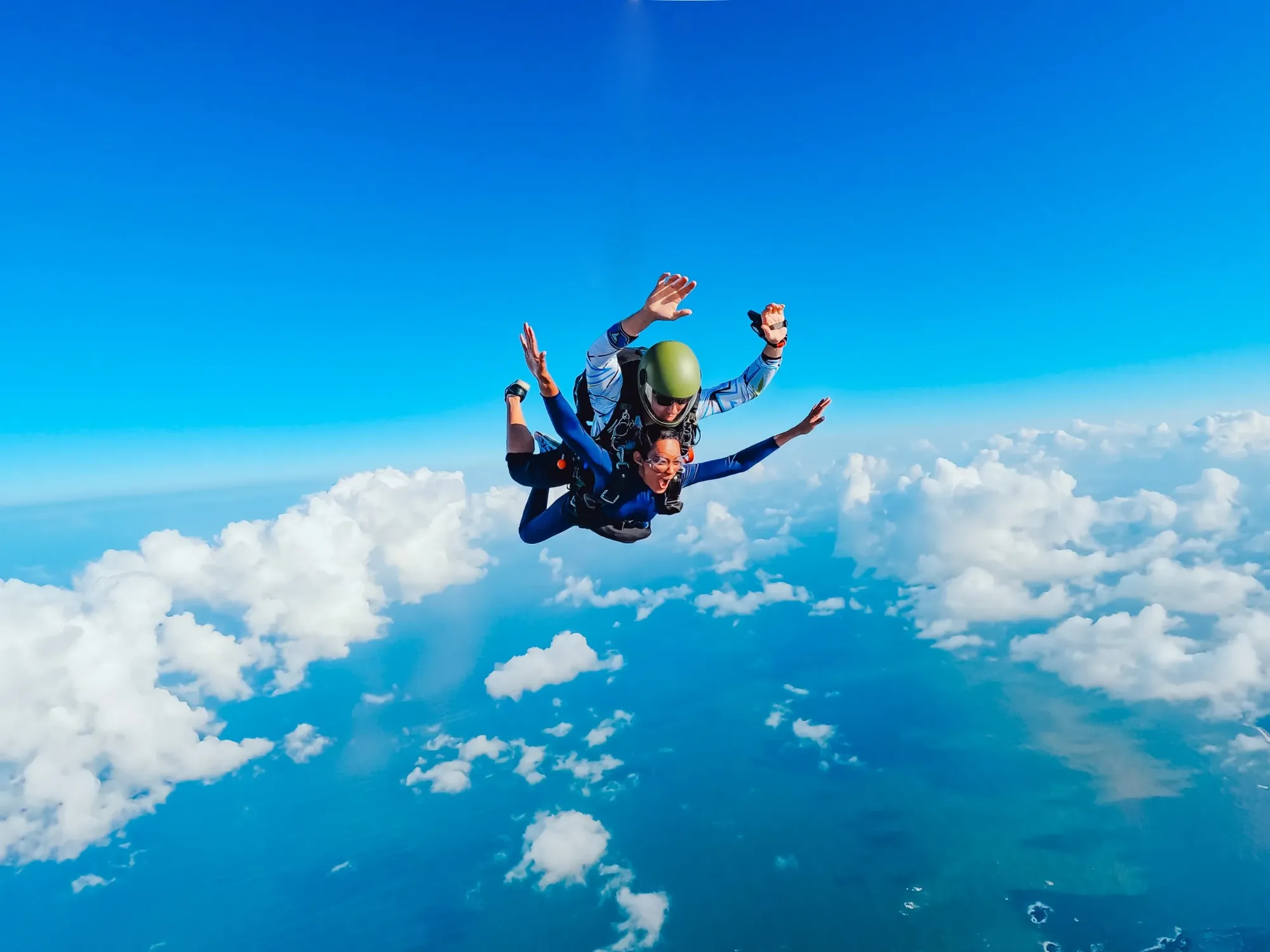
Japan gives you five dropzones that barely resemble each other — the country's highest exit forty-five minutes from Tokyo Station, a helicopter hover-exit ninety minutes out, the longest freefall in the country over a river plain in Tochigi, a Sea of Japan coastline reachable from Kyoto, and a short premium season in the mountains of Hokkaido. There is no single Japanese skydive. There are five, and choosing badly costs you either a lot of money or a lot of train time.
This is the honest version: what each one costs in 2026, what the limits actually are, when they fly, and the one thing almost every article about skydiving in Japan gets wrong — the Mount Fuji jump.
The short version
Five bookable dropzones. Skydive Nippon at Kawajima in Saitama, from ¥61,500 ≈ $388 — the closest dropzone to central Tokyo and the highest exit in the country at 13,000 ft. Skydive Azul at Chikusei in Ibaraki, from ¥56,000 ≈ $353, the country's cheapest and the only helicopter exit. Skydive Fujioka in Tochigi, from ¥61,000 ≈ $385, which claims Japan's longest freefall at around 60 seconds. Skydiving Kansai at Toyooka in Hyogo, ¥58,000 ≈ $366 all-inclusive, for the Osaka and Kyoto side. Skydive Hokkaido, ¥200,000 ≈ $1,261, a short premium summer season in the Niseko area. The Mount Fuji tandem is a separate Azul product at JPY 99,000 with a hard 175 cm and 80 kg limit.
The five dropzones
Skydive Nippon — Honda Airport, Kawajima, Saitama
Nippon is the closest dropzone to central Tokyo — about forty-five minutes from Tokyo Station via Okegawa, against an hour and a quarter for Fujioka and a ninety-minute drive for Azul. It flies from Honda Airport in Kawajima, Saitama, out on the Kanto Plain, and it took over the field from Tokyo Skydiving Club when that operation closed and transferred its customers across.
It also has the highest exit in the country: 13,000 ft, against Fujioka's 12,500 and 12,000 at Azul, Kansai and Hokkaido. That buys 40 to 50 seconds of freefall and a four to five minute canopy ride. On a clear day Mount Fuji is visible from under canopy — not the same thing as Azul's Fuji jump, but the only way to get the mountain in frame from a Tokyo-area tandem without paying the Nirasaki premium.
Two things make it unusually easy for visitors. The minimum age is 16 with signed parental consent, where Fujioka and Kansai both start at 18 — if you are travelling with a teenager, this is the only option in this guide. And it runs an English-language phone line and answers on WeChat, which is rare among Japanese dropzones. Jumping days are Monday, Friday, Saturday, Sunday and public holidays; the weight limit is 92 kg, weighed on site in the clothes and shoes you jump in, with a height range of 140 to 190 cm.
Skydive Azul — Chikusei, Ibaraki
Azul is the outlier in Asia, not just Japan: it exits from a helicopter rather than a fixed-wing aircraft. There is no climbing spiral and no bench seat. The aircraft comes to a hover and you leave from a skid into completely still air, which produces a strange, quiet second or two before the wind arrives that fixed-wing jumpers never experience.
The base is at Chikusei on the Kanto Plain in western Ibaraki, roughly ninety minutes from central Tokyo. Exit is around 12,000 ft. Tandems start at ¥56,000 ≈ $353, which makes it the cheapest jump in the country as well as the most unusual.
It is also a small operation. Azul told us they run 10 to 12 jumpers per day — not twelve loads, twelve people — which is the single most important planning fact about them. Slots are genuinely scarce, and a group of six is most of a day''s capacity. They have said a week''s notice is workable if the date still has space, but that is not the same as availability.
Skydive Fujioka — Sky Field Watarase, Tochigi
Fujioka is in Tochigi prefecture, not Gunma — a distinction worth making because there is also a Fujioka City in Gunma and a great deal of the internet has them confused. The dropzone sits on the riverbed between the Watarase retarding basin and the Watarase sports park, on the flat land where Saitama, Tochigi, Gunma and Ibaraki all meet. It is one of the busiest sky-sports areas in Japan; paragliders, hot-air balloons, gliders and ultralights share the same airspace.
The pitch is altitude and time. Fujioka exits at around 3,800 m and advertises close to 60 seconds of freefall, which it claims is the longest publicly bookable tandem in Japan. It is organised as an NPO rather than a company — a legacy of its training-club origins — and that shows in the pricing, which is the most transparent and the most granular of any operator we list in the country.
Granular in a way that matters: the price depends on what time you jump.
| Slot | Hand Camera Course | + Air Cameraman |
|---|---|---|
| 08:30 | ¥61,000 ≈ $385 | ¥81,000 ≈ $511 |
| 10:00 | ¥64,000 ≈ $404 | ¥84,000 ≈ $530 |
| 12:00 | ¥65,000 ≈ $410 | ¥85,000 ≈ $536 |
| 14:00 | ¥66,000 ≈ $416 | ¥86,000 ≈ $542 |
| 15:00 | ¥68,000 ≈ $429 | ¥88,000 ≈ $555 |
Peak dates — Golden Week and the summer holidays — add a further ¥2,000 to ¥3,000 across the board. The earliest slot is both the cheapest and, as at every dropzone on earth, the one with the calmest air. Book 08:30 and you save ¥7,000 and get better conditions. There is a group discount for parties of five or more, and a student discount on production of accredited ID at check-in.
One practical warning: there are no changing rooms at Fujioka, so arrive in clothes you can jump in.
Skydiving Kansai — Tajima Airport, Toyooka
If your trip is anchored to Osaka or Kyoto rather than Tokyo, this is your dropzone. Skydiving Kansai flies from the west hangar at Tajima Airport in Toyooka, Hyogo, on the Sea of Japan side — about three hours from Osaka by road or by rail on the JR San''in line. The freefall looks out over the Sea of Japan coastline and the Maruyama river basin, and on a clear day across to the Tango peninsula.
Pricing is the simplest in the country: ¥58,000 ≈ $366, all-inclusive. No slot pricing, no peak surcharge, no separate media tier to decide about. For a first-timer who does not want to think about it, that is worth something.
Skydive Hokkaido — Niseko area
The most expensive tandem in Asia that we list, and the shortest season. Skydive Hokkaido runs a summer-only operation in the Niseko area, jumping from around 12,000 ft with handcam footage included, at ¥200,000 ≈ $1,261.
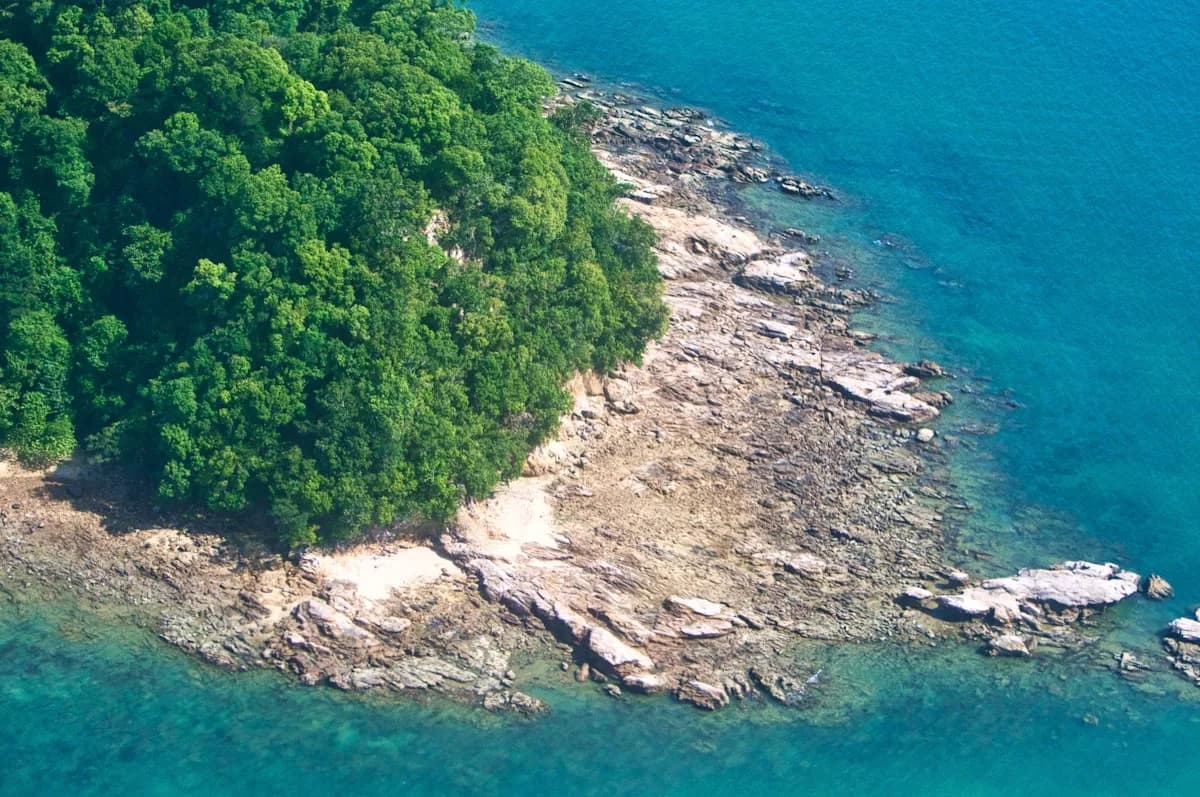
That is roughly three and a half times the price of Azul, and it buys you a genuinely different landscape — green volcanic headlands, the Sea of Japan, and the Niseko ranges inland — plus scarcity. Eleven Google reviews at 4.8 tells you how few people jump here. Whether the view is worth the multiple is a personal question, but nobody should book it by accident.
The five compared
| Dropzone | Where | From | Exit | Aircraft | Season |
|---|---|---|---|---|---|
| Skydive Azul | Chikusei, Ibaraki | ¥56,000 ≈ $353 | ~12,000 ft | Helicopter | Most of the year |
| Skydiving Kansai | Toyooka, Hyogo | ¥58,000 ≈ $366 | ~12,000 ft | Fixed wing | Most of the year |
| Skydive Fujioka | Tochigi | ¥61,000 ≈ $385 | 3,800 m / 12,500 ft | Cessna 208B Caravan | Mar – mid-Jan |
| Skydive Nippon | Kawajima, Saitama | ¥61,500 ≈ $388 | 13,000 ft | Fixed wing | Mon, Fri–Sun year-round |
| Skydive Hokkaido | Niseko area | ¥200,000 | ~12,000 ft | Helicopter | Summer only |
The Mount Fuji jump is a separate thing
This is the part that trips people up. Searching for a Mount Fuji skydive returns a lot of pages implying you can turn up at a Tokyo-area dropzone and jump with Fuji in shot. That is not how it works.
Skydive Azul is the only operator in Japan running a Mount Fuji tandem, and it is a distinct product from their Ibaraki jump. It departs by helicopter from Nirasaki in Yamanashi — a different prefecture from their Chikusei base — and costs JPY 99,000 rather than ¥56,000 ≈ $353. You wear a supplied jumpsuit; you cannot jump in your own clothes.
And there is a hard physical gate, because the helicopter cabin used on the Fuji route is very narrow.
Mount Fuji tandem: maximum height 175 cm, maximum weight 80 kg. The operator has stated there are no exceptions. This limit applies to the Fuji product only — it is not the limit for Azul's standard Ibaraki jump. If you are over either figure, the Fuji jump is not available to you at any price, and you should plan around one of the other three dropzones.
What it actually costs
Japan is not a cheap place to skydive. The floor is ¥56,000 ≈ $353, against THB 8,000 ≈ $238 in Thailand and ₱28,350 ≈ $452 in the Philippines. What you get for it is aircraft quality, punctuality and a safety culture that is, in our experience of the region, unusually procedural.
| Operator | Package | Price (JPY) | Approx. USD |
|---|---|---|---|
| Skydive Azul | Ibaraki helicopter tandem | 56,000 | ~355 |
| Skydive Azul | Mount Fuji helicopter tandem (Nirasaki) | 99,000 | ~628 |
| Skydive Azul | Tokyo Special — helicopter tandem for two | 278,000 | ~1,762 |
| Skydiving Kansai | Tandem, all-inclusive | 58,000 | ~367 |
| Skydive Fujioka | Hand Camera Course (08:30 slot) | 61,000 | ~386 |
| Skydive Nippon | Hand Camera Course (weekday) | 61,500 | ~390 |
| Skydive Fujioka | Hand Camera + Air Cameraman (08:30 slot) | 81,000 | ~514 |
| Skydive Nippon | Cameraman Course (weekday) | 81,500 | ~517 |
| Skydive Hokkaido | Tandem, handcam included | 200,000 | ~1,267 |
Azul's Tokyo Special at ¥278,000 ≈ $1,753 is priced for two people, not one — it works out at ¥139,000 ≈ $877 each, and it is a scenic helicopter route rather than a straight jump. Worth knowing before the number frightens you off.
Weight and height limits
This is the most common reason a Japanese booking falls over on the day, and the limits here are tighter than most of Asia. Japanese tandem rigs and aircraft cabins are sized for a domestic market, and the operators enforce the numbers at check-in rather than waving them through.
- Skydive Fujioka: maximum 94 kg, confirmed directly by the operator. Height under 200 cm. Surcharges apply above 75 kg (+¥1,000), 80 kg (+¥2,000) and 85 kg (+¥3,000).
- Skydive Nippon: 40 to 92 kg, weighed on site in the clothes and shoes you jump in. Height 140 to 190 cm. Age 16 to 69, with signed parental consent for 16 and 17 year olds.
- Skydive Azul, Mount Fuji product: maximum 175 cm and 80 kg, no exceptions.
- Skydive Azul, Ibaraki product: confirm at booking — the Fuji limits do not apply here.
- Skydiving Kansai and Skydive Hokkaido: confirm when you enquire.
If you are travelling as a group, get everyone''s weight before you book anything. A single 96 kg jumper cannot be added to a Fujioka manifest on the day, and at 82 kg the Mount Fuji jump is already closed to you. This is the constraint that most often splits a group across two operators.
When to jump
April to November is the prime window nationally — mild temperatures, the clearest visibility, and the least disruption. But the useful answer is per-dropzone, because the seasons are not the same.
Hokkaido is summer only, and short. Fujioka flies most weekends and public holidays but closes entirely from mid-January to the end of February, when winter winds ground too many loads to be worth scheduling around. Azul at Ibaraki and Kansai at Toyooka run most of the year, weather permitting. Cherry blossom in spring and autumn foliage in October and November are both genuinely worth planning a jump around — the aerial view of either is the reason a lot of people choose Japan over cheaper options.
Getting there
From Tokyo
Nippon is the easiest of the lot: about forty-five minutes from Tokyo Station to Okegawa on the JR Ueno-Tokyo line, then a taxi, or an East Bus to the Yamagayato stop and a ten-minute walk. By car it is roughly ten minutes from the Okegawa-Kitamoto interchange on the Ken-O Expressway. Fujioka is next: about an hour from Kita-senju to Fujioka station on the Tobu Nikko line, then a short taxi. There is a dropzone shuttle from the station, but only for the 08:30 slot and only if you book it in advance. Azul at Chikusei is about ninety minutes from central Tokyo and is realistically a drive.
From Osaka or Kyoto
Skydiving Kansai at Toyooka is roughly three hours by road, or by rail on the JR San''in line. It is a long half-day either way, and worth pairing with a night in the area rather than attempting as a same-day return.
Which one should you choose?
- Closest to Tokyo, and the highest exit in the country: Skydive Nippon at Kawajima, from ¥61,500 ≈ $388 — 13,000 ft, forty-five minutes from Tokyo Station.
- Cheapest, and the most unusual exit: Skydive Azul at Chikusei, from ¥56,000 ≈ $353. Book early — they take 10 to 12 people a day.
- Longest freefall and the most transparent pricing: Skydive Fujioka, from ¥61,000 ≈ $385 at the 08:30 slot.
- Simplest to book, and right for a Kansai itinerary: Skydiving Kansai, ¥58,000 ≈ $366 all-inclusive.
- A landscape you cannot get anywhere else in Asia, at a price to match: Skydive Hokkaido, ¥200,000, summer only.
- Mount Fuji in the frame: Azul's Nirasaki helicopter tandem, ¥99,000 — but only if you are under 175 cm and 80 kg.
- Travelling with a 16 or 17 year old: Skydive Nippon is the only operator here that takes under-18s, with signed parental consent.
Japan against the rest of Asia
| Japan | Thailand | Philippines | |
|---|---|---|---|
| Cheapest tandem | ¥56,000 ≈ $353 | THB 8,000 ≈ $238 | ₱28,350 ≈ $452 |
| Typical exit | 12,000–12,500 ft | 13,000–13,500 ft | 10,000 ft |
| Scenery | River plain, coast, mountains | Coastline and mountains | Reefs and sandbars |
| Language | Japanese-first, English workable | English throughout | English throughout |
| Booking style | Advance, slot-based | Flexible | Advance |
Thailand is cheaper and easier. The Philippines is more scenic. Japan''s case is different: it is the only country in the region where you can exit a hovering helicopter, the only one where you can put Mount Fuji in the frame, and the only one where the operation runs to the minute. If that is what you want, nowhere else in Asia substitutes.
Tandems start at JPY 56,000 at Skydive Azul in Chikusei, Ibaraki. Skydiving Kansai is JPY 58,000 all-inclusive, Skydive Fujioka starts at JPY 61,000 for the 08:30 slot, Skydive Nippon is JPY 61,500 on a weekday, and Skydive Hokkaido is JPY 200,000 for its short summer season. Azul's Mount Fuji helicopter tandem is JPY 99,000.
Yes, with Skydive Azul — but it is a separate product from their Ibaraki jump. It departs by helicopter from Nirasaki in Yamanashi, costs JPY 99,000, and has a hard limit of 175 cm and 80 kg with no exceptions because the cabin is very narrow. On a clear day Mount Fuji is also visible under canopy from Skydive Nippon at Kawajima, which is a cheaper way to get it in frame without the Nirasaki premium.
Skydive Nippon at Kawajima in Saitama, about forty-five minutes from Tokyo Station via Okegawa. Skydive Fujioka in Tochigi is around an hour from Kita-senju on the Tobu Nikko line plus a short taxi, and Skydive Azul at Chikusei is about ninety minutes and realistically a drive.
Yes, and it is tighter than most of Asia. Skydive Fujioka has confirmed a 94 kg maximum with height under 200 cm, and applies surcharges above 75, 80 and 85 kg. Skydive Nippon runs 40 to 92 kg and 140 to 190 cm, weighed on site. Azul's Mount Fuji product is capped at 175 cm and 80 kg with no exceptions. Confirm the limit before booking for a group.
Skydive Nippon at Kawajima accepts jumpers from 16, with a signed parental consent form for 16 and 17 year olds. Skydive Fujioka and Skydiving Kansai both start at 18. Nippon's upper limit is 69.
April to November is the prime window nationally. Hokkaido is summer only, and Fujioka closes from mid-January to the end of February for winter winds. Cherry blossom in spring and autumn foliage in October and November are the two views worth planning around.
No. You can enquire in English through Skydive In Asia and the listed operators are used to international tandem guests. Skydive Nippon also runs an English-language phone line. Some paperwork and the on-site safety briefing may still be in Japanese, so allow extra time on the day.
Skydive In Asia editorial team is an adventure travel writer covering skydiving destinations, first-time jump guides, and bucket-list experiences across Asia.